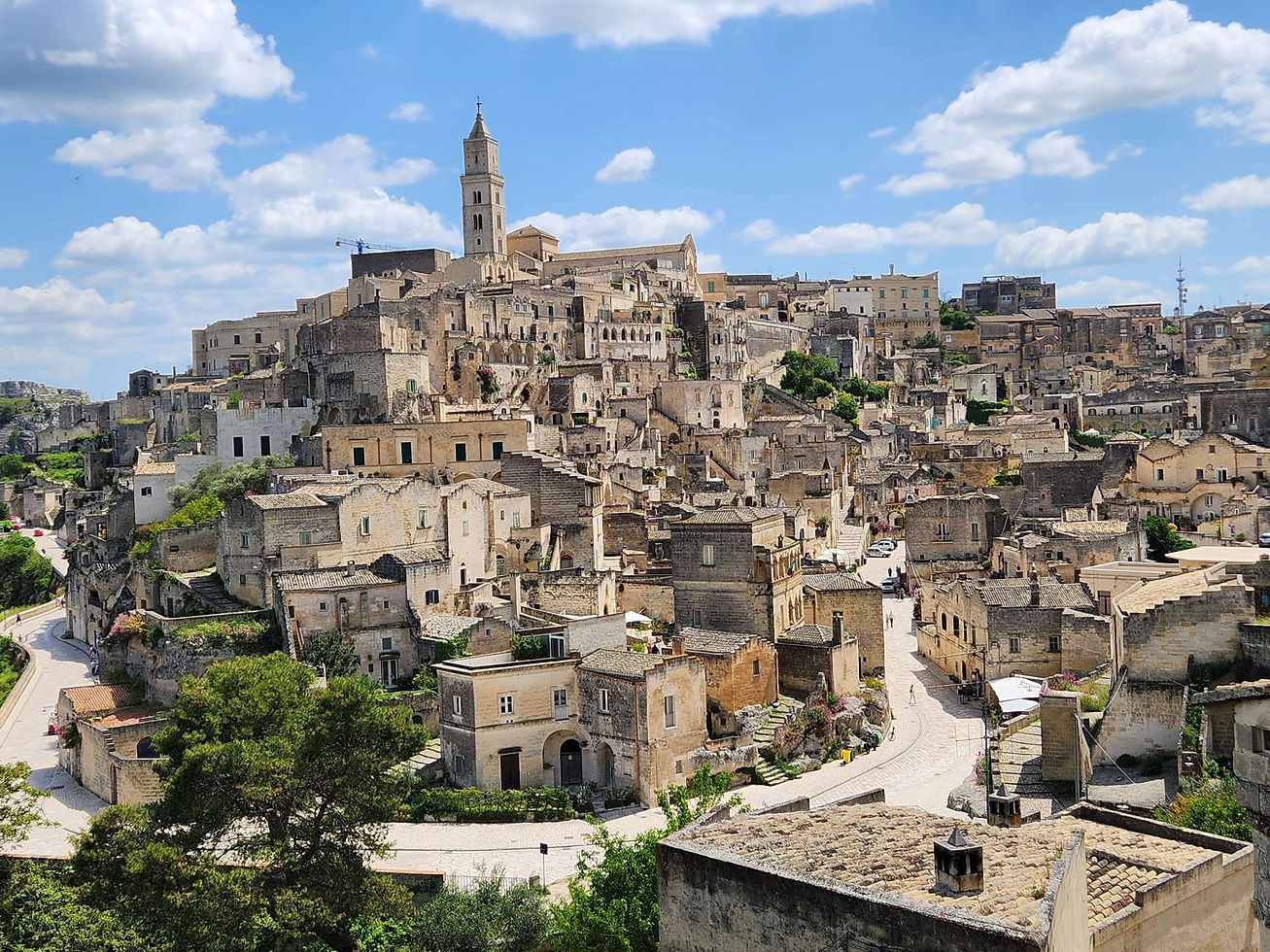
Day 9 Walking Tour in Southern Italy: Matera

Nestled in the heart of Basilicata, Matera is a breathtaking UNESCO World Heritage site and one of the world's oldest continuously inhabited cities, boasting prehistoric cave dwellings known as the Sassi. Known as an "underground city" of ancient, limestone-carved homes.

If you are staying in Bari and plan to visit Matera, skip the bus and opt for the far more comfortable Ferrovie Appulo Lucane (FAL) local commuter train. While same-day tickets are available with fixed pricing, I highly recommend booking online 2 months in advance, as the train was completely full when we traveled.

Since we arrived at noon as we entered the streets of Matera, we followed our hunger to a hidden gem that truly stole the show: Il Fiore Del Latte. This charming, unassuming spot is run entirely by one talented woman who crafts some of the most impressive panini we’ve ever encountered.

If you're looking for a legendary lunch full of flavor and satisfying, this tiny shop is an absolute must-visit on your Matera itinerary.

Our next stop was the heart of modern Matera, Vittorio Veneto Square, a vibrant bustling hub that bridges the city's ancient cave-dwelling past with its historic expansion. As Matera began to grow beyond the Sassi in the 18th and 19th centuries, this plaza became the city's essential focal point.

We stopped to admire the central Fontana Ferdinandea, which was beautifully restored in 1832 under King Ferdinando II, marking it as a true landmark of civic pride. It's the perfect place to grab a coffee and feel the energy of a city that has thrived for thousands of years.
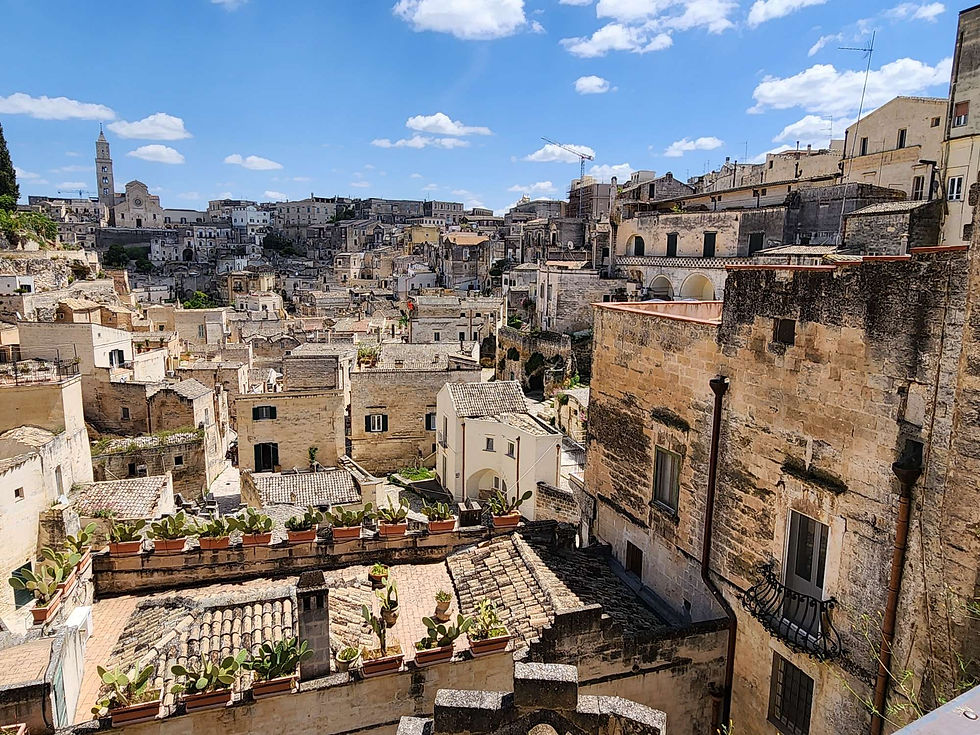
Stepping through Vittorio Veneto Square we stumbled upon a breathtaking vantage point through an archway, offering our first true glimpse of the city's astonishing, ancient heart. Before us lay the city, an incredible, cascading display of stone buildings packed tightly together around the hillside. It was a chaotic masterpiece—churches, restaurants, homes, and shops all locked together like a complex Lego puzzle, carved directly into the limestone.
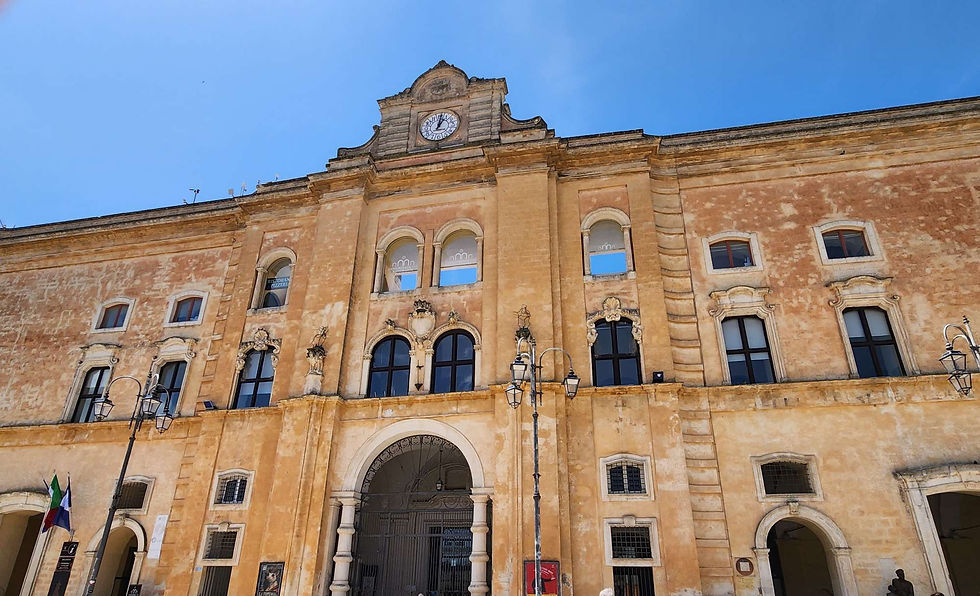
We soon spied the imposing stone Annunziata Palace in the piazza, a true testament to the city's layered history. Originating back to 1739 as a convent, this remarkable structure has seen many reincarnations over the centuries—serving as an Annunciation church, a courtroom, a school, and the provincial capital. Adorned with a clock in 1900, the building suffered devastation during the 1980 earthquake but was beautifully restored in 1998.

Perched just outside the historic center of Matera, the stunning Church of San Giovanni Battista is a must-see masterpiece of Apulian Romanesque architecture.

Originally constructed between 1230 and 1233 for the cloistered nuns of Accon who fled Palestine, this ancient, elegant structure served as a beacon of faith before being abandoned following the 1480 Ottoman invasion.

Reopened in 1695, its enduring story is carved into the intricate stone portal and visible in the striking, vaulted interior, offering travelers a profound glimpse into Southern Italy’s medieval past.

Visiting Matera is a unique, bucket-list day trip in Southern Italy, offering an unforgettable step back in time, but it is essential to note that the historic Sassi district is best suited for those without mobility issues and in reasonable physical shape. The ancient, carved-out environment is physically demanding, characterized by a labyrinth of steep, narrow limestone staircases, which become treacherous on a rainy day.
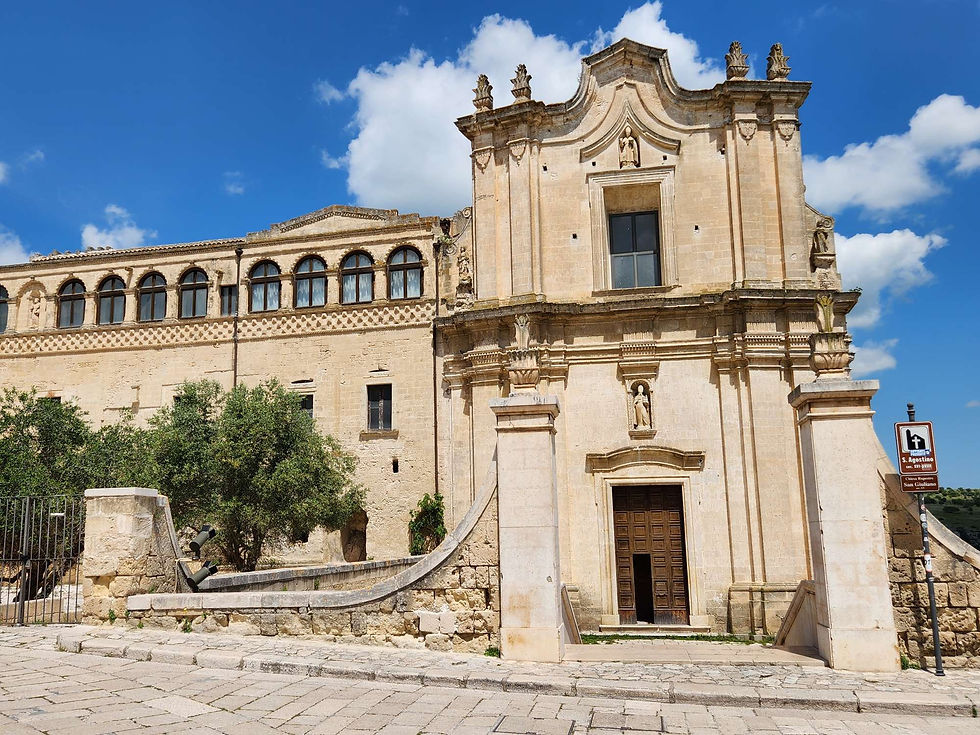
We continued our climb and reached the Convent of Saint Augustine. Standing as a timeless testament to the city’s profound history and artistic beauty, it was founded by the Augustinian monks in the late 16th century.

This serene retreat offers more than just spiritual solace; its elevated location treats visitors to breathtaking, panoramic views over the rugged ravine of the Gravina.

Completed in 1595, the church serves as a striking visual monument, perfectly blending Late Renaissance and early Baroque design to create an unforgettable landmark.

We returned to our climb and eventually reached the highest ridge where the Matera Cathedral stands as a testament to centuries of faith.
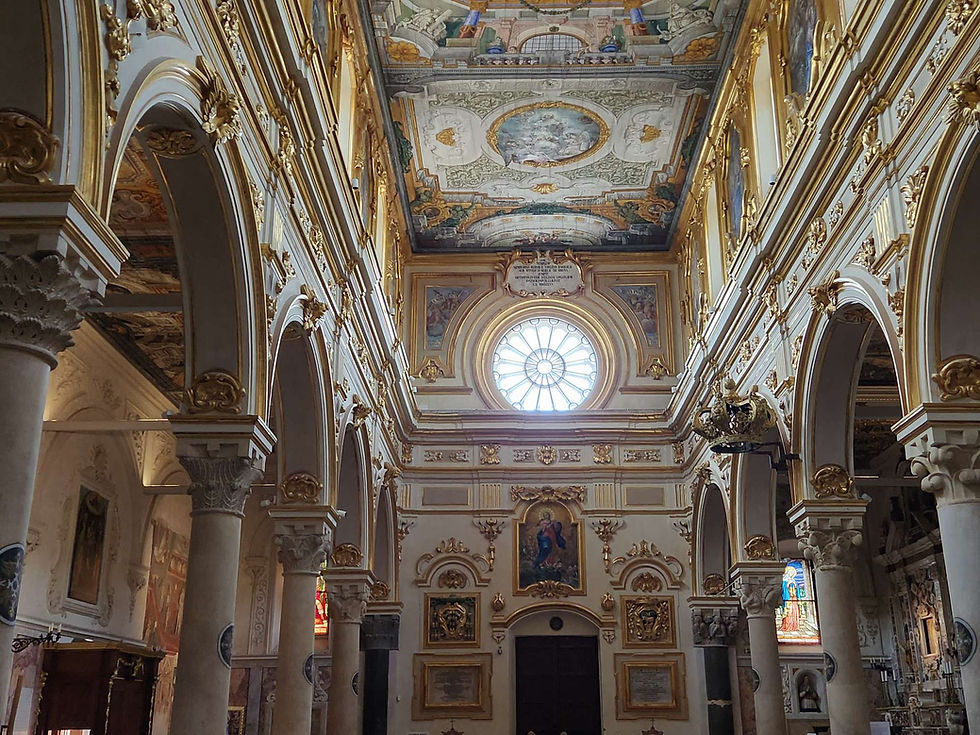
Dedicated in 1270 to the Dark-skinned Madonna, the Apulian Romanesque exterior is a sight to behold, featuring a stunning rose window and a commanding 170-foot bell tower that dominates the skyline.

While the facade inspires awe, stepping inside reveals a dramatic contrast: opulent, gilded, and painted ceilings, intricate plasterwork, and breathtaking golden altars.

Our visit to the church included the attached museum of relics which houses the most hideous and truly frightening, ancient crucifix I have ever seen!
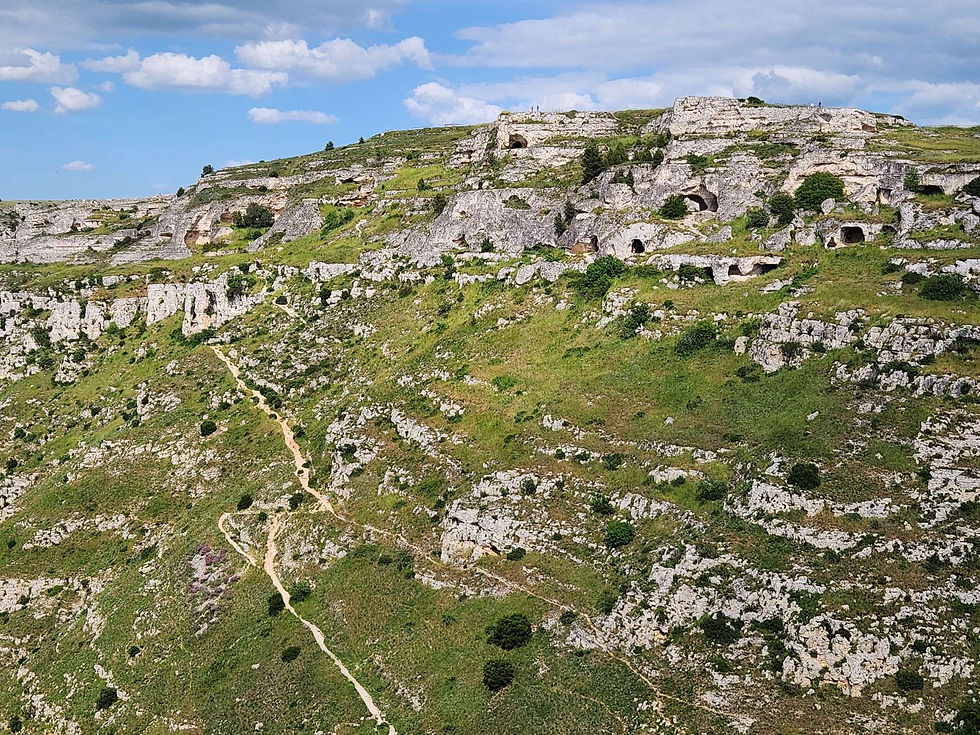
We stood across from the Sassi di Matera, too tired (and old) to attempt the hike down to the original cave dwellings carved into the limestone. They date back to the Bronze Age—some even believed to be inhabited around 7000 BC, but we will leave that part of Matera for the young at heart!
This prehistoric landscape offers a hauntingly beautiful, raw backdrop that has captivated the film industry for decades, with some examples such as The Passion of the Christ (2004), James Bond's No Time to Die (2021), and Wonder Woman (2017).

From refreshing Gelato to dining for every budget; from art centuries old, to art from this century's masters;

exploring the oldest continuously inhabited city in the world, feels like walking through a living nativity scene.


Comments