Skip Positano Prices: Your Cost-Conscious Amalfi Coast Travel Guide

I made a mistake. I’ll bet you haven't seen that opening line too often! I planned a five-week journey across Southern Italy—stopping in Naples, Bari, Lecce, Tropea, and Diamante—before aiming to squeeze in the Amalfi Coast just prior to my flight home from Rome. However, after adjusting my schedule to avoid anticipated May train strikes and weekend crowds, I boxed myself into a corner: I only had three days to see the Amalfi Coast. Read on as I share my three-day adventure and reveal how much time you should actually set aside for this part of your holiday.

Since I just returned from personally experiencing the Amalfi Coast, I want to make one thing perfectly clear before diving into my adventures: it is absolutely worth the hype. The region is often compared to Italy’s Cinque Terre, and for good reason—both boast dramatic cliff-side villages, crystal-clear water, fresh seafood, beautiful beaches, and lush, citrus-filled trees. However, the two destinations differ significantly when it comes to getting around.
The Cinque Terre is incredibly easy to navigate thanks to the quick and efficient Cinque Terre Express, which connects adjacent towns in just 5 to 10 minutes. With multiple journeys per hour and late trains running until 11:00 PM, getting between villages is a breeze. In contrast, traveling between Amalfi Coast towns relies almost entirely on the famous—and infamous—SITA buses.
Bus travel here is notoriously uncomfortable, unreliable, and disorganized. There is no such thing as an orderly line; you wait at bus stops crammed into a chaotic crowd. Arriving early doesn’t guarantee a seat, as passengers push their way forward, leaving the polite behind. Many travelers report missing two or three buses before finally being able to squeeze onto one. Because of the heavy coastal traffic, conditions on board can become cramped and stiflingly hot, leading to motion sickness for some. Furthermore, the roads are infamous for their sharp turns and dangerous conditions. Keep in mind that local bus services are limited, with the last buses often wrapping up between 5:00 PM and 8:00 PM. Miss that final bus, and you’ll be faced with a shockingly expensive taxi ride to get back to your hotel.

Alternatively—and this is a method I highly recommend—you can travel by ferry. This is a beautiful, scenic ride between the picturesque cliff towns. You can book your tickets in advance online, and the boats are generally reliable. However, there are two main complications to keep in mind: the last ferries usually stop running by 5:00 PM, and adverse weather, particularly strong winds, can suspend boat services entirely.

Because the transportation options along the Amalfi Coast can be limited and unpredictable, careful planning and choosing the right home base are absolutely essential. I have created a diagram illustrating 10 of the 13 villages* and their corresponding ferry ports to help you visualize the coastline.
While the ideal approach to planning your visit depends heavily on your age, mobility, and fitness level, here is how you can tailor your itinerary with my Amalfi Coast Travel guide:
For Seniors & Young Families: My primary recommendation is designed for those who want to avoid steep hills, endless stairs, crowds, and high prices, while still enjoying reliable access to ferry and bus lines.
For Energetic Travelers: Active young adults with higher budgets may prefer to stay in the more exclusive or less accessible villages, which offer a more private and upscale experience.
The coastline naturally splits into two distinct groups: villages connected by the ferry network and those only reachable by SITA buses. Luckily, the most famous villages—which many claim are the most beautiful and well worth a visit—are the three I’ve ‘hearted’: Positano, Amalfi, and Vietri sul Mare. For travelers, Salerno acts as the ultimate gateway. The Salerno Centrale station offers direct rail connections to Naples, Rome, Florence, Bologna, Milan, and beyond. Additionally, the city features two ferry docks that provide routes to six Amalfi villages, as well as farther destinations like Capri, Sicily, Tunis, and Malta. While Ravello, Praiano, and Furore require a bus ride to reach, Atrani is just a short, easy walk from Amalfi.

Before recommending a length of stay on the Amalfi Coast with this Travel Guide, it's helpful to break down accommodation costs. Below is a pricing comparison of the top 10 coastal villages, plus the city of Salerno:
1. The Most Expensive (Peak Luxury)
Positano: Famous for its dramatic vertical landscape, this is the region's most glamorous and heavily touristed town. Luxury hotels, private beaches, and Michelin-starred dining mean room rates are consistently the highest on the coast.
Ravello: Located high in the mountains and only accessible by bus, this quiet retreat is known for lush gardens, 5-star palace hotels, and high-end cultural events.
2. Moderate to High (Premium Cost)
Amalfi: The bustling, historic hub of the coast. Because of its central location and easy ferry access, historic hotels here are still quite pricey, though slightly more affordable than Positano.
Praiano: Highly sought after for their dramatic sea views, these cliffside accommodations command high prices due to a concentration of luxury boutique resorts, though the area is often a touch quieter than its neighbors.
3. Moderately Priced (Good Value)
Atrani & Furore: Tiny, incredibly scenic towns situated right next to the bigger hubs. They offer a more local feel with slightly more manageable lodging costs.
Maiori & Minori: Known for their larger beaches and flatter terrain. These towns are highly popular and offer a great mix of boutique rentals, mid-range hotels, and lower dining costs.
Vietri sul Mare & Cetara: Famous for ceramics (Vietri) and fresh seafood (Cetara). As the eastern gateway towns to the coast, they are significantly more budget-friendly and less saturated by international tourists.
4. The Most Affordable
Salerno: A bustling, lived-in alternative to typical Amalfi villages. Highly affordable, it is a perfect base for budget-conscious travelers seeking an authentic, less-crowded experience. Key highlights include wandering the atmospheric medieval Centro Storico to the 11th-century Salerno Cathedral, relaxing with a stroll along the palm-lined Lungomare promenade or visiting Europe’s first botanical garden the Giardino della Minerva.
*I chose to bypass a few towns in this Amalfi Coast Travel Guide itinerary. Scala and Tramonti are peaceful mountain villages above the coastal drive, but they are only accessible by bus. I also excluded Conca dei Marini. Famous for the Emerald Grotto (Grotta dello Smeraldo), it requires a bus ride, followed by a grueling 400-step climb down to the beach and back.
For my recent three-day trip in May, I chose Salerno as my home base. While track repairs meant taking a Trenitalia replacement bus to Vietri sul Mare instead of the train, the journey was easy. On day three, we took a breezy ferry from Salerno to Amalfi, finishing with a lovely, short walk to Atrani. My wife really enjoyed Salerno’s vibe, and it served as an excellent transportation hub with highly convenient ferry terminals for visiting Vietri sul Mare, Cetara, Maiori, Minori, Amalfi, and Positano. However, three days was definitely not enough. Positano, Ravello, Amalfi, and the upper villages are ideal for travelers with deep pockets and high physical stamina. However, for budget-conscious visitors, families, seniors, and those requiring easier accessibility, I’ve designed two alternative itineraries
.
Proposed 5-to-6-Day Amalfi Coast Travel guide
(home base Salerno)
Day 1: Arrival & Local Exploration
Arrive at Salerno Centrale station and settle into your accommodations. Spend your first evening unwinding and exploring the city’s local sights.
Day 2: Ceramic Charms in Vietri sul Mare
Travel to Vietri sul Mare via train, bus, or ferry. Known as the gateway to the Amalfi Coast, it is the perfect place to explore locally crafted ceramics.
Day 3: Coastal Views (Minori & Maiori)
Take a ferry to Minori, a charming town with a calmer, protected bay and highly consistent ferry arrivals. From here, you can take a quick, easy walk to Maiori. Alternatively, if you are up for a scenic and active route, hike the Path of Lemons (Sentiero dei Limoni), a 2-kilometer coastal trail connecting the two towns.
Day 4: History & Romance (Amalfi & Atrani)
Catch a ferry to Amalfi to take in its historic beauty, and enjoy a leisurely, short walk to the neighboring, quiet village of Atrani.
Day 5: The Icon of Positano
Take a ferry to Positano to spend the day exploring its cliffside pastel-colored houses and boutique shops.
Day 6: Departure or a Salerno Rest Day
You can conclude your trip and continue your journey by train from Salerno or add an extra day to further explore the city's highlights. (Tip: We highly recommend adding this rest day after Day 3 to give yourself a breather from the travel!)
Proposed 7-to-8-Day Amalfi Coast Travel Guide
(Home Bases: Salerno and Minori)
Day 1: Arrival & Salerno
Arrive at Salerno Centrale station and check into your accommodation.
Day 2: Vietri sul Mare
Travel to the charming ceramic town of Vietri sul Mare via train, bus, or ferry.
Day 3: Relocate to Minori
Change your home base to the quieter, beachside town of Minori. Take the ferry for a scenic transit. After settling into your accommodation, spend the afternoon exploring local sights like the ancient Roman Villa.
Day 4: Amalfi & Atrani
Catch the ferry to Amalfi, soak in its bustling atmosphere, and enjoy the short, scenic walk to the neighboring, quiet village of Atrani.
Day 5: Amalfi & Ravello
Catch the ferry back to Amalfi. This time, take a local bus up the mountain to Ravello to spend the late morning and early afternoon exploring its stunning cliffside gardens.
Day 6: Positano
Take the ferry to the iconic, cliffside village of Positano. Spend the day wandering its boutique-lined streets and relaxing on the beach.
Day 7: Return to Salerno
Take the ferry back to Salerno, allowing you to conveniently stage yourself for an easy departure the following morning.
Day 8: Departure
Check out of your hotel and head out for your onward journey.
Reflecting on my recent 3-day trip to the Amalfi Coast, it’s time to share my thoughts on the city and towns we explored. Salerno is a bustling, highly walkable city with a well-planned, flat layout, especially in its newer sections. The Historic Center (Centro Storico) is a beautifully preserved medieval quarter, with narrow alleys woven with historic facades, cozy cafes, and artisan shops.

Two churches stood out as absolute must-sees. The first is Chiesa di San Giorgio (Church of Saint George), which dates back to the 8th century. Its unassuming exterior hides a splendid Baroque sanctuary, filled with stunning ceiling frescoes by the artist Angelo Solimena.


The second is Duomo di Salerno (Salerno Cathedral), built between 1080 and 1085 on the ruins of a Roman temple. Its 12th-century bell tower and Romanesque facade give way to an eclectic interior showcasing a blend of medieval, Baroque, Arab-Norman, and Rococo styles. The floors and walls are a masterclass in detail, covered in intricate sculptures and mosaics, while whimsical animal sculptures cap the Roman columns.


Yet, the crowning jewel of the cathedral lies beneath it: the crypt of St. Matthew the Apostle. Having explored dozens of crypts throughout Europe, I can confidently say this is the most impressive. The vaulted ceiling is entirely covered in breathtaking 17th-century frescoes by master Belisario Corenzio, while the altar features a striking bronze statue of St. Matthew created by Michelangelo Naccherino in 1606.


In addition to the local churches, we loved hiking up to the Giardino della Minerva (Garden of Minerva). Dedicated to ancient and medieval medicine, this outdoor park dates back to the 14th century and is celebrated as the first botanical garden in the Western world. It fell into ruin but was beautifully restored and replanted based on Medieval Illuminated Manuscripts and was opened to the public in 2000 . Today, it features a terraced layout and gravity-fed water channels. It made for a delightful two-hour visit, offering stunning city views from the terraces and a lovely tea café with a
patio.


As mentioned previously, Salerno has not one but two ferry piers, so pay close attention to any tickets you purchase online to ensure you head to the right location. The impressive, modern Stazione Marittima di Salerno (Maritime Station) is the primary cruise hub and is situated beside the Manfredi pier. However, if your online ticket lists the Concordia pier—which is located conveniently close to the train station—be aware that the two terminals are actually 2.4 kilometres apart!


We spent a full day exploring Vietri sul Mare, one of our favorite towns during our five-week holiday in Southern Italy. We loved its relaxed, authentic vibe and the vibrant, hand-painted majolica tiles that adorn shop fronts, street murals, and building exteriors alike. While the town’s historic center sits perched atop the hill and it is quite a trek down to the beaches, the seaside lidos are beautifully laid out (though accessing them requires a fee).


On the way down, we passed several fascinating sights, beginning with the Ceramica Artistica Solimene factory. Designed by Italian architect Paolo Soleri, this impressive ceramic structure looks like something Gaudí himself would have created. Its tiled façade gives the building a prehistoric, reptilian appearance, and its sheer scale is overwhelming. Inside, the space is temple-like, featuring a vast, open layout with treelike columns and shelves filled with ceramics.


Not far away is another Gaudí-esque gem: the Villa Comunale. This incredible viewpoint boasts sinuous, ceramic-clad staircases that wind down several terraces, with the sparkling Gulf of Salerno beckoning just below. Finally, we made our way to the Church of San Giovanni Battista. Built at the village's highest point, it is well worth a visit for its late-Renaissance façade, elegant bell tower, and iconic dome encrusted with colorful majolica tiles. Unfortunately, the church was closed on the day of our visit, so we had to settle for capturing its exterior.


On our final day, we visited the town of Amalfi, arriving by a lovely ferry ride from the Manfredi pier. Stepping off the boat, you will find yourself in the Piazza del Duomo—an exciting meeting point where tourists, locals, and vendors converge in a vibrant symphony of chatter and motion. The Sant’Andrea Fountain is a lovely spot to rest and refresh as you take in the grand staircase leading up to the magnificent, striped Amalfi Cathedral.
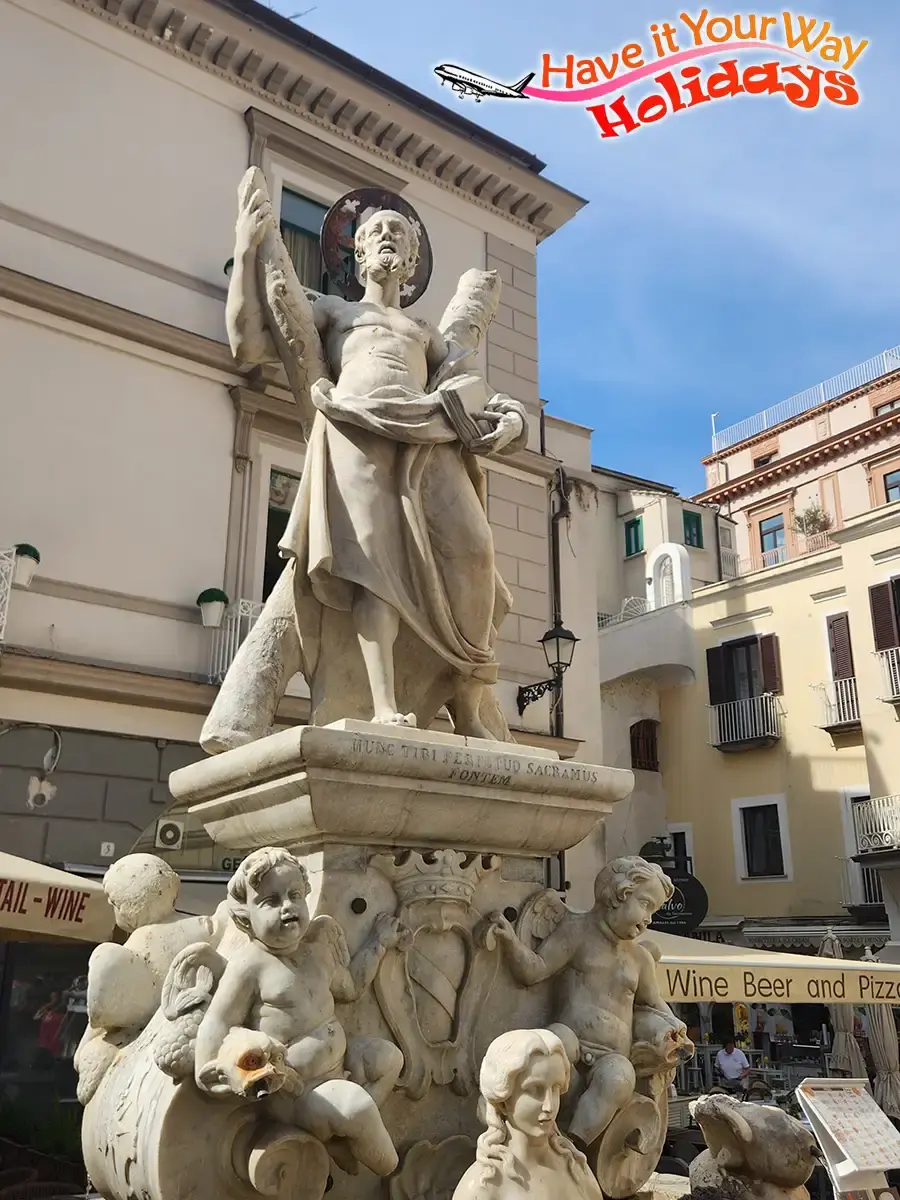


Dedicated to Saint Andrew the Apostle, the church became a major pilgrimage destination after Cardinal Peter of Capua brought the saint's relics from Constantinople in 1208. The cathedral’s bell tower and columns harken back to the Romanesque period, but it is the amazing exterior facade, with its striking Moorish influence, that truly takes your breath away. While the bronze doors date back to 1060, the interior is lavishly decorated in the Baroque style.


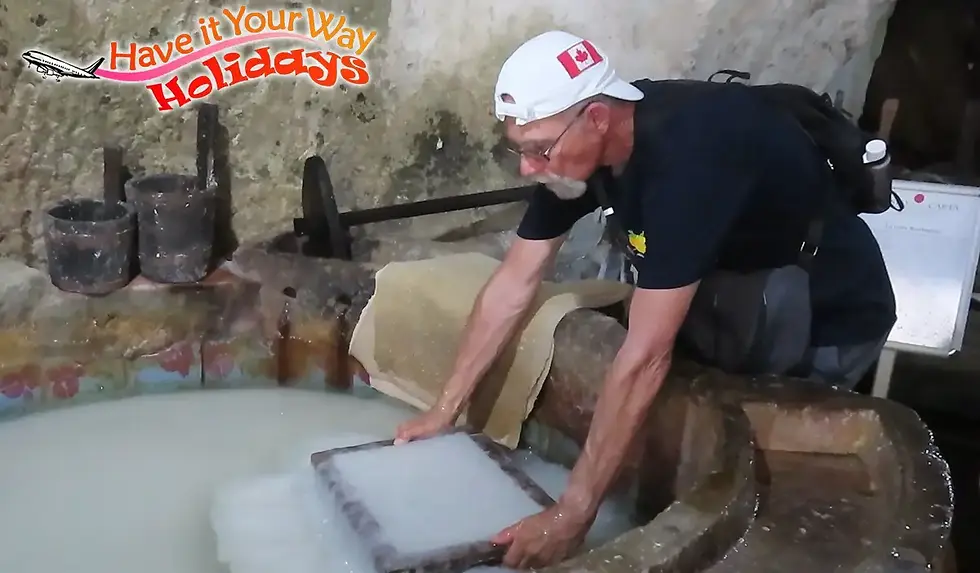
The main street gently rises up the hill from the square, lined with wonderful shops and eateries. If you are looking for an unusual but fun activity, continue climbing Via Lorenzo d’Amalfi until you reach the Museo della Carta (Museum of Handmade Paper). There, we enjoyed an excellent tour and had the unique opportunity to make our own paper.


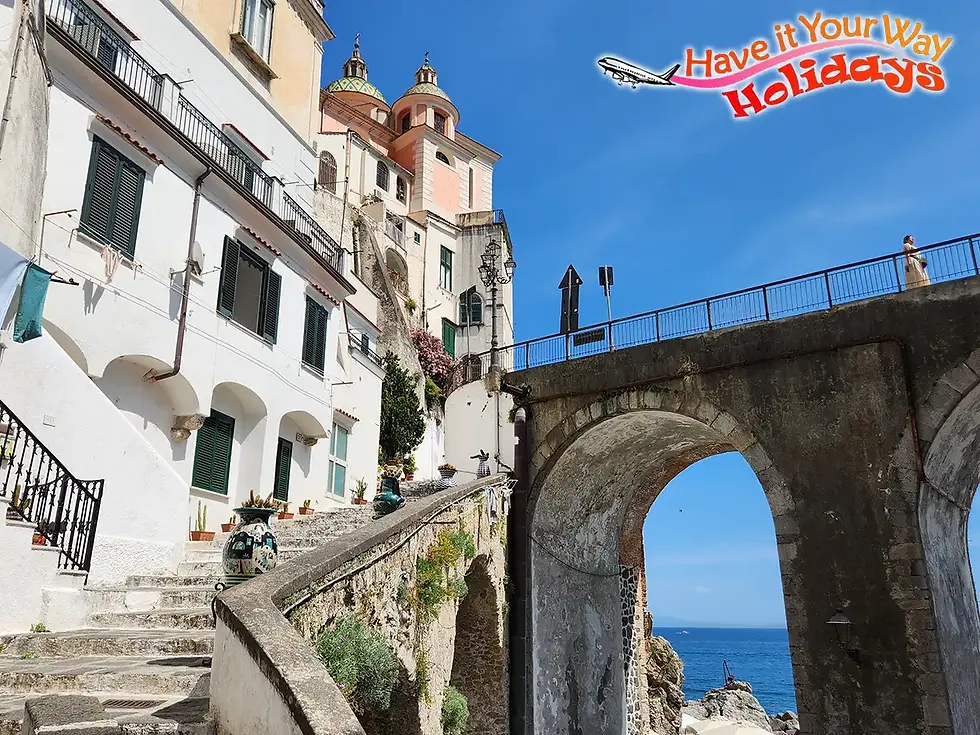
Our final village visit was just a short walk from Amalfi. After strolling past a beautiful stretch of pristine beach, we arrived in Atrani. Known as the smallest village in Italy, this car-free fishing village offers a lovely central plaza and a cozy circle of restaurants. Looking up from the village, you will see the Church of Santa Maria Maddalena with its striking, colorful majolica-tiled dome, while a pretty sand beach sits just below.



Looking back on my all-too-short, three-day getaway to the Amalfi Coast, it’s clear this region demands a different mindset than the train-friendly Cinque Terre. Because local buses and ferries require a bit more patience, choosing the right home base is everything. By breaking down the costs, I highlighted Salerno as the most affordable and stress-free hub. Use it as your launchpad to follow our cost-conscious 5 to 8-day itineraries, enjoying lovely day trips to Vietri sul Mare, Amalfi, and Positano.


Comments