From Coast to Culture: A May Journey Through Diamante and Cosenza

When I first researched the best village to use as a home base along Calabria's Tyrrhenian coastline, Diamante (diamond) immediately caught my eye. Having already explored the bustling streets of Naples, Bari, Lecce, and Tropea, I was craving a slower, more authentic change of pace.

Diamante is the crown jewel of the intriguing Riviera dei Cedri—a stretch of coast named after the Cedro Liscio Diamante, a rare, ancient citrus used by Jewish communities worldwide during the Feast of Sukkot.

It is tucked away on the shimmering Tyrrhenian Sea, a smaller town offering everything I needed: a tranquil escape from the crowds, easy access to local day trips, and a vibrant, photographer's dreamscape before heading up to the Amalfi Coast.
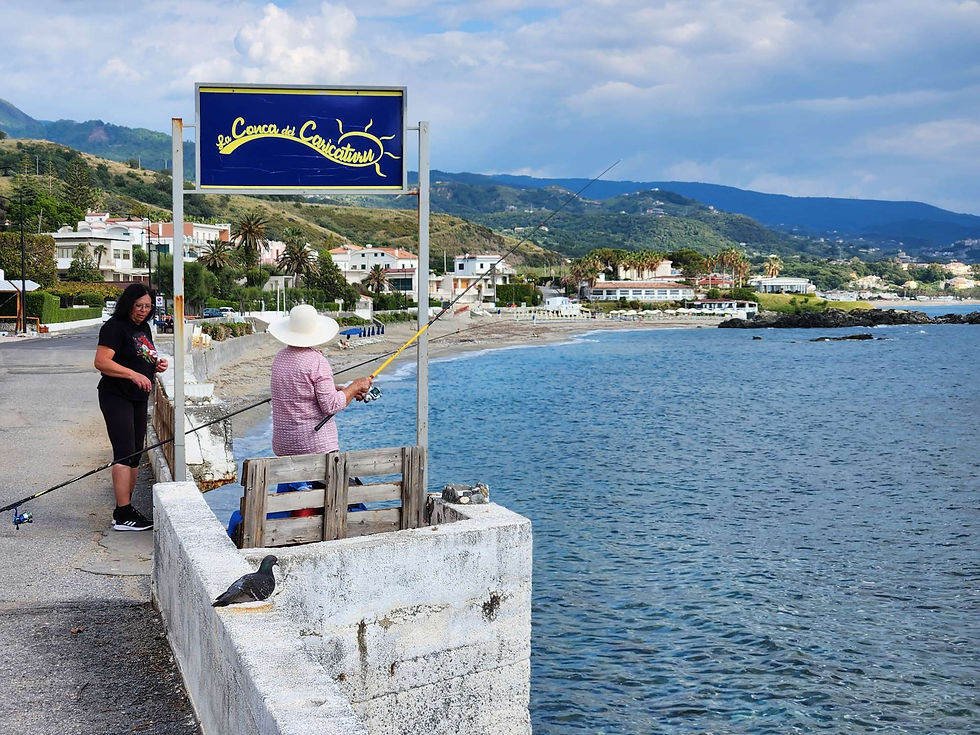
Recognized in 2017 as one of Italy's most beautiful seaside villages, Diamante is famously celebrated as the "City of Murals."
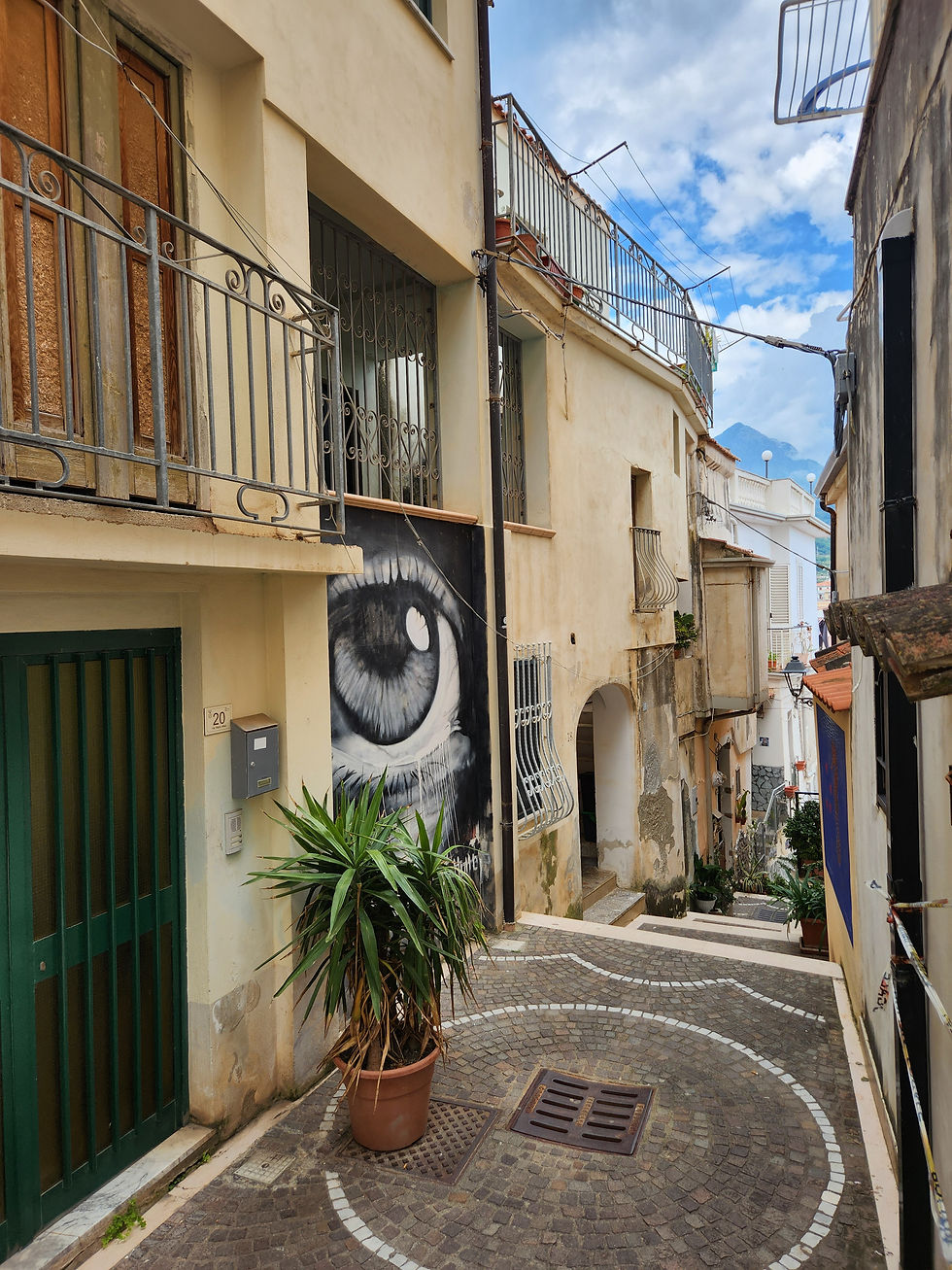
Walking through its historic center feels like stepping into a sprawling open-air museum, making it one of the largest of its kind in the world.

Needless to say, the combination of rich culture and breathtaking street art was more than enough to convince me to visit.

This blog post covers three main topics: First, we will explore the coastal charm of Diamante and its spring offerings as seen during our visit in May. Next, we will recount our day trip inland to the historic city of Cosenza. Finally, I will share my personal reflections on the vibrant street art that has rightfully made this Calabrian gem famous.
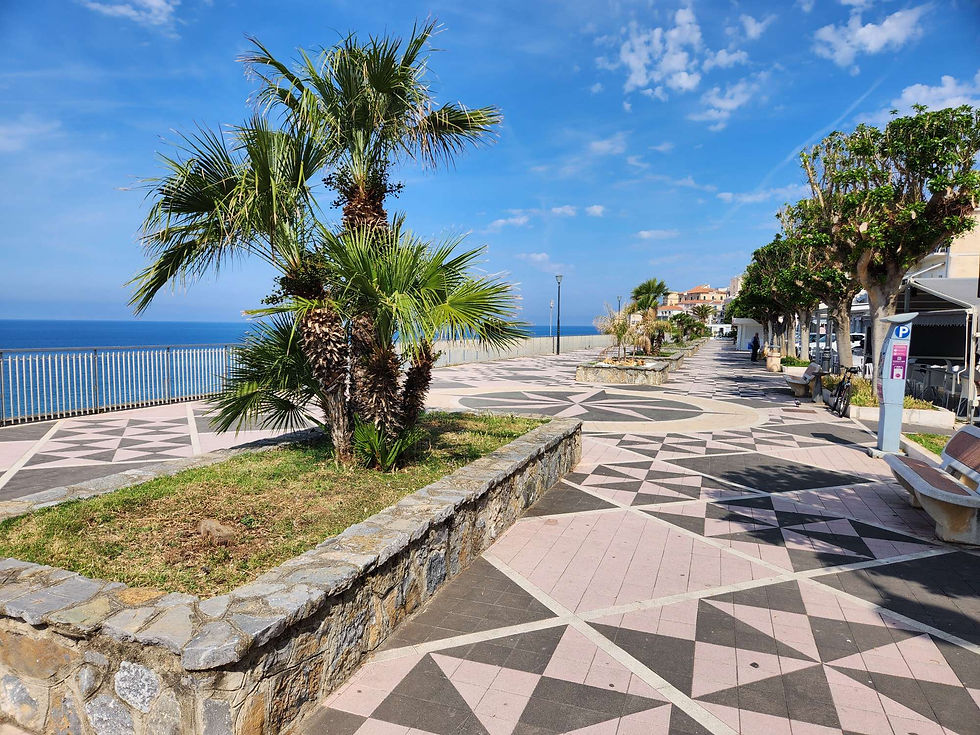
Upon entering the village of Diamante, you are instantly greeted by the stunning Lungomare, locally nicknamed the town’s outdoor "living room."
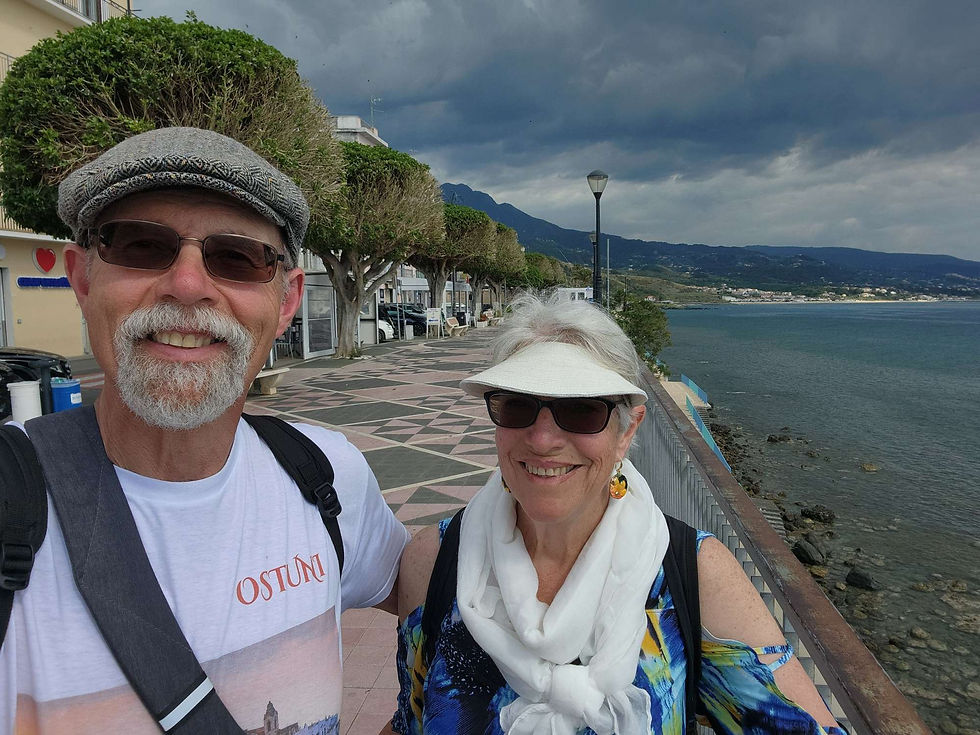
Stretching for over a kilometer, this sprawling, palm-lined promenade was first constructed in 1965.
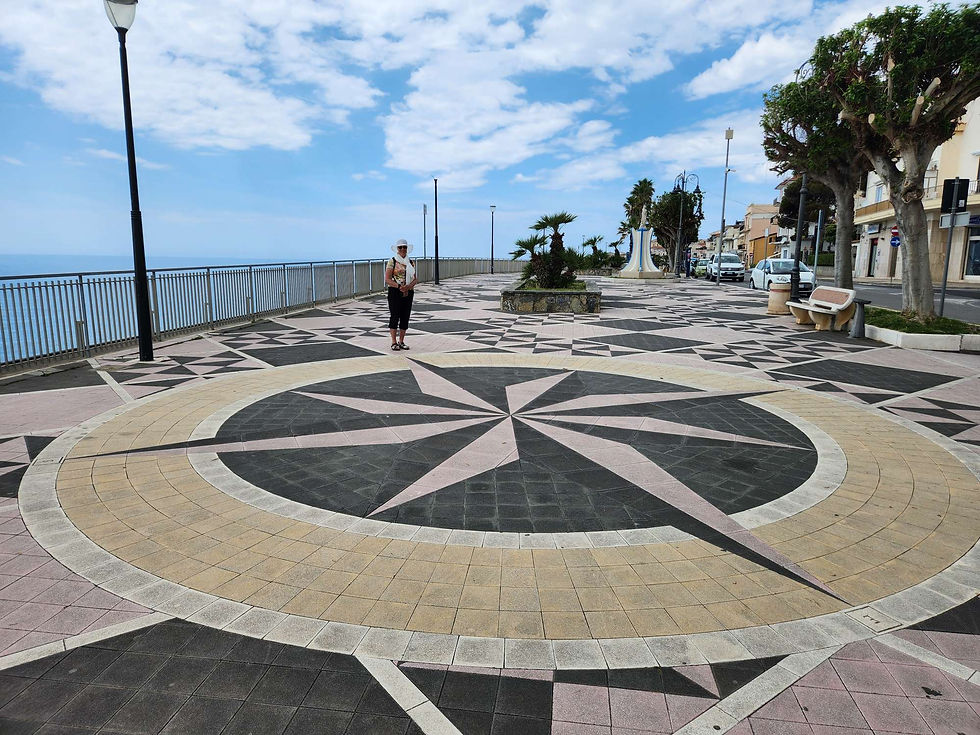
Originally built to protect the growing town from the Tyrrhenian Sea's powerful winter storms, this massive engineering feat evolved into both a protective sea wall and a breathtaking walkway perfect for an evening passaggiata.

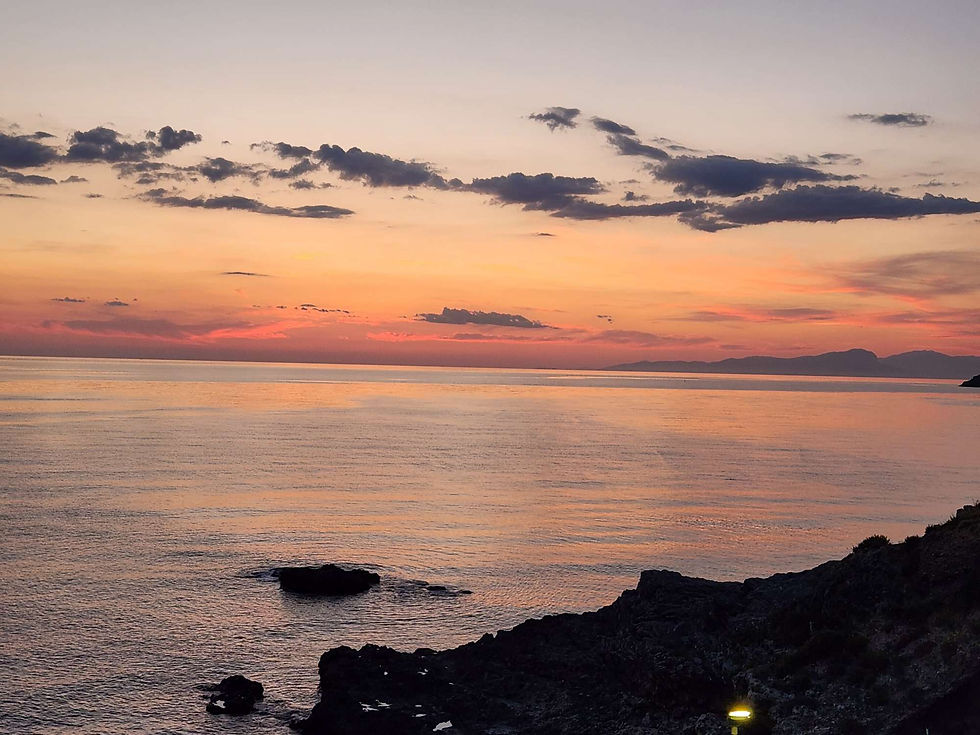
When we visited in mid-May, we practically had the promenade to ourselves. By evening, however, locals and a handful of other tourists joined us, all savoring the crisp sea breeze and the golden glow of the sun sinking into a spectacular sunset.
While much of Southern Italy’s coastline—such as the exquisite Lungomare and beaches of Diamante —is famous for its popular sunbathing, arriving in mid-May can reveal a tourist season that has not quite shifted into gear.

Only a few umbrellas and loungers dot the sand, with a sprinkling of hardy European visitors soaking up the meager spring rays. Nevertheless, these stunning stretches boast a Blue Flag rating, a prestigious distinction guaranteeing pristine water quality, excellent safety standards, and top-tier environmental management.

On our visit, however, save for a few open cafés and gelaterias, the beaches were quiet, the lifeguards were bored, and many shops remained closed, holding their breath for the hot sunshine of June.
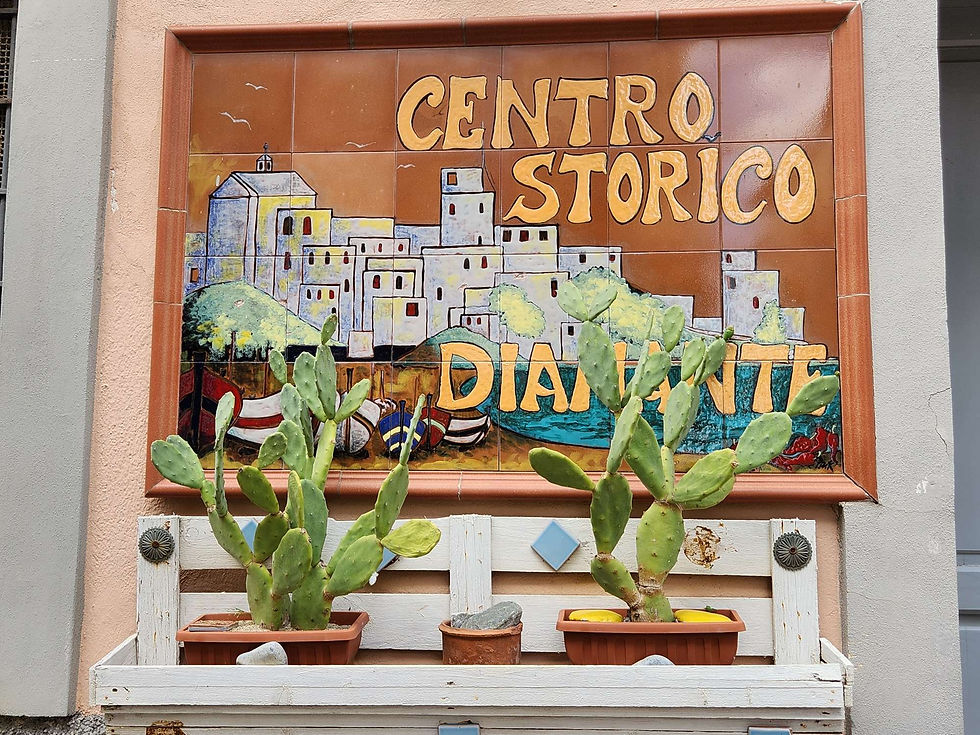
Instead of lounging on the quiet sands, we shifted our focus inland, photographing the beautiful alleyways and simple sculptures of Diamante's Centro Storico.

Sprinkled throughout Diamante are playful nods to the town's famous Peperoncino Festival, a beloved spicy tradition held each September for over three decades.

While this lively celebration perfectly coincides with the chili pepper harvest, the timing of our visit unfortunately puts us four months too early.

Even so, as we strolled through Diamante’s highly walkable, mural-lined village, we couldn't help but notice that even the local restaurants have very little of this spicy harvest to offer yet.

Despite being heavily bombed by Allied air raids during World War II, this enchanting coastal gem has rebuilt and largely preserved its historical charm and architectural heritage.
Having admired Diamante's vibrant visual offerings and seaside beauty, it was time to embark on a daytrip inland to Cosenza and discover the cultural treasures that this historic city has to offer travelers in May.

When searching for the perfect day trip from Diamante, Cosenza instantly captured my imagination. Known as the "Athens of Italy," I read how this city flawlessly blends rich history with contemporary flair. You can wander through one of the country's most ancient, labyrinthine historic centers, gazing up at the imposing castle, or stroll along the MAB (Museo all'Aperto Bilotti) Open-Air Museum where modern masterpieces stand freely on the streets. Throw in a couple of centuries-old churches, a serene villa, and the promise of outstanding food, and the destination seemed irresistible. It even harbors a legendary, yet-to-be-found treasure—the mythical tomb of King Alaric complete with his vast trove of gold. Every clue pointed toward an unforgettable day out.

Unfortunately, arriving in Cosenza on a mid-May Sunday turned out to be a rather lackluster experience. With most shops shuttered and several tourist sites closed, the vibrant energy I read about was missing, leaving the streets mostly empty except for a few welcoming cafes and gelaterias.
Traveling from the coast to Cosenza is wonderfully straightforward. The regional train from Diamante takes about 1 hour and 20 minutes (with a quick transfer at Paola station), while the return journey is a breezy one-hour direct trip. However, since the Cosenza station sits about 4 km outside the main city center, you will need to plan for a quick local bus or taxi ride.

When we arrived, we opted for the bus and headed to the local tabaccheria to buy our tickets, only to discover the shop was closed for the Sunday. We nervously boarded the bus hoping the driver would accept cash or that contactless tapping was available—neither was an option! Luckily for us, our wonderfully cheerful bus driver simply waved us on board, saving the day as we headed off to explore our very first historical site.
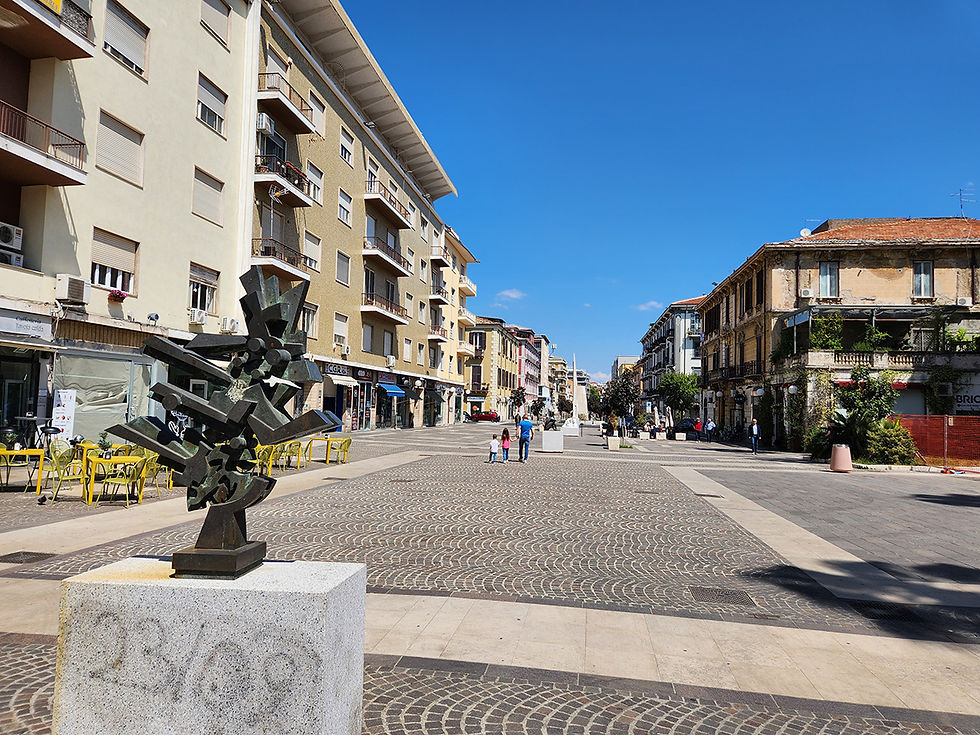
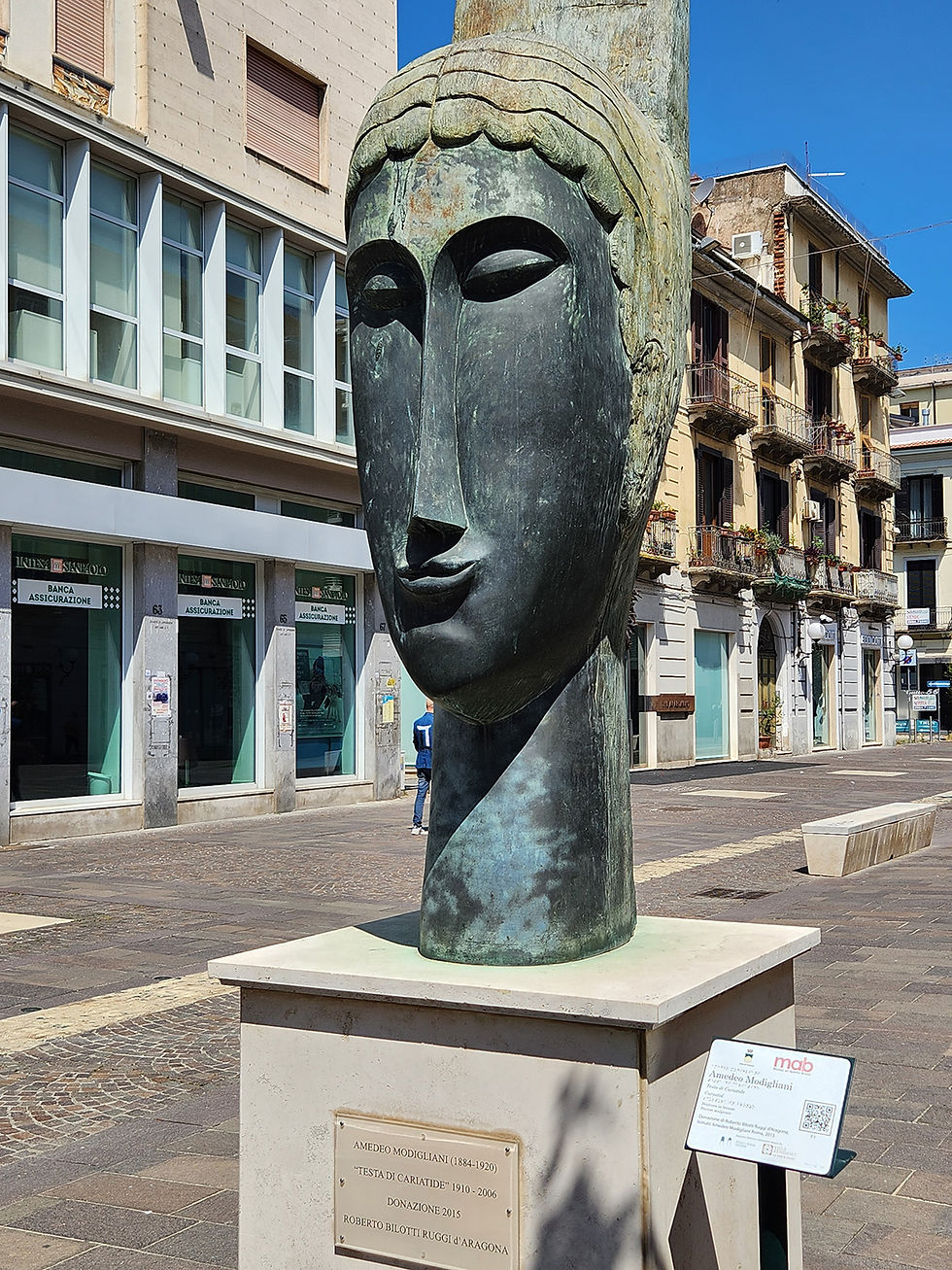
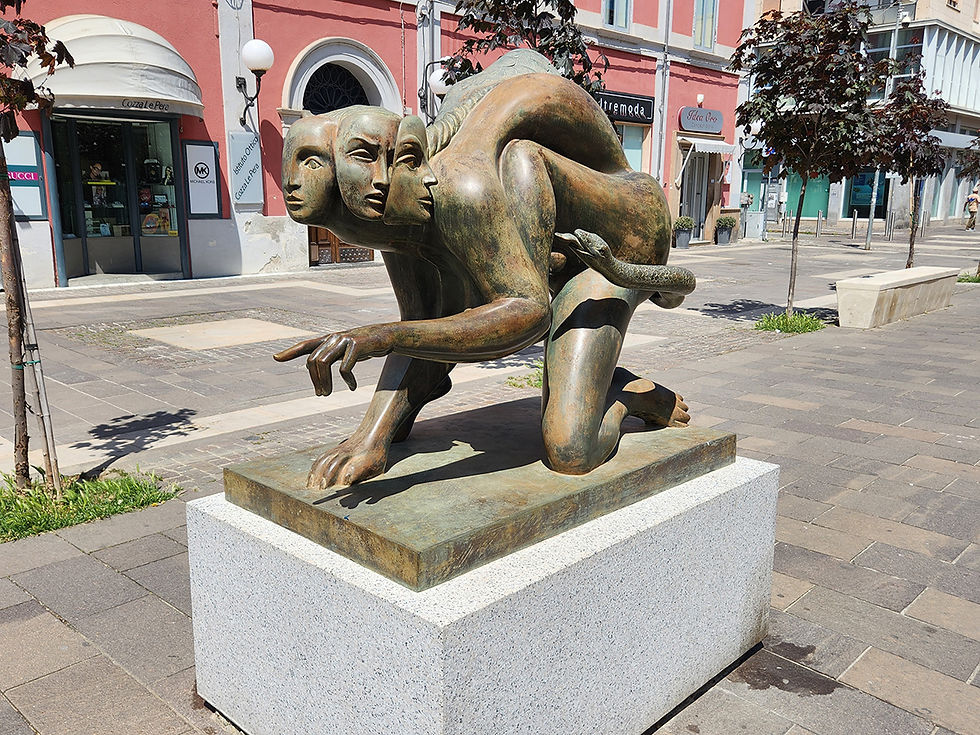
Just a short walk from our bus stop, we found ourselves in downtown Cosenza at the top of Corso Mazzini. The city's shopping street marks the beginning of the renowned MAB Bilotti Open-Air Museum. Strolling along the pedestrian walkway, we marveled at 20th-century contemporary sculptures from nationally and internationally renowned artists. The impressive open-air exhibit currently features 20 permanent core pieces alongside nine continuously evolving works. While the collection offers a spectacular visual treat for art enthusiasts, my personal three favorites were Amedeo Modigliani’s "Head of a Caryatid," Alba Gonzales’ "The Sphinx", and Salvador Dalí's "Saint George and the Dragon".

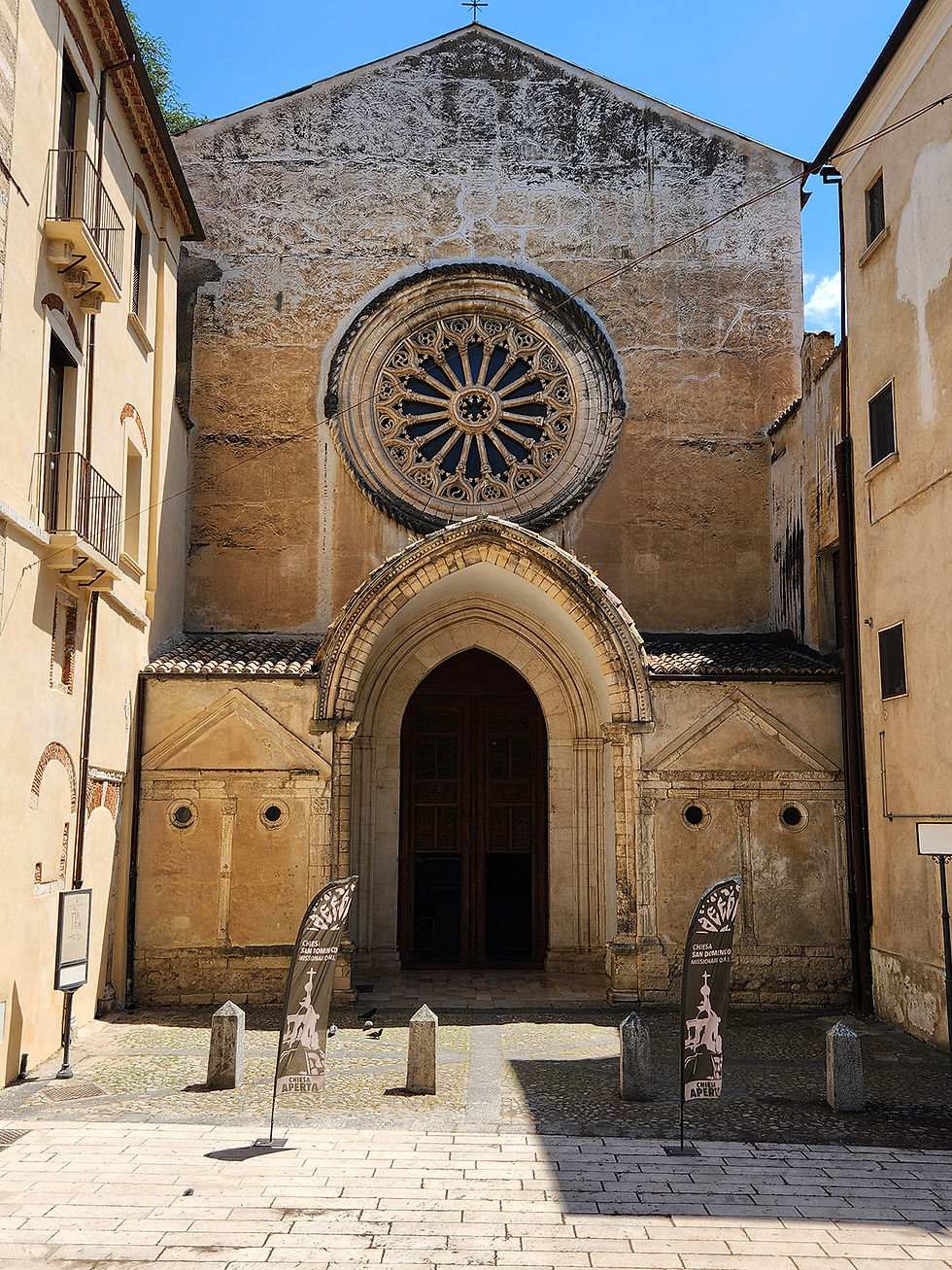
After our stroll through the MAB Open-Air Museum, we made our way to the historic Church of San Domenico in Piazza Tommaso Campanella. Dating back to the early 1400s, this church boasts a remarkable Gothic rose window, split into 16 sections by slender columns that fan out from a central ring. Inside, visitors will find a stunning blend of Gothic, Renaissance, and late-Baroque architectural elements.


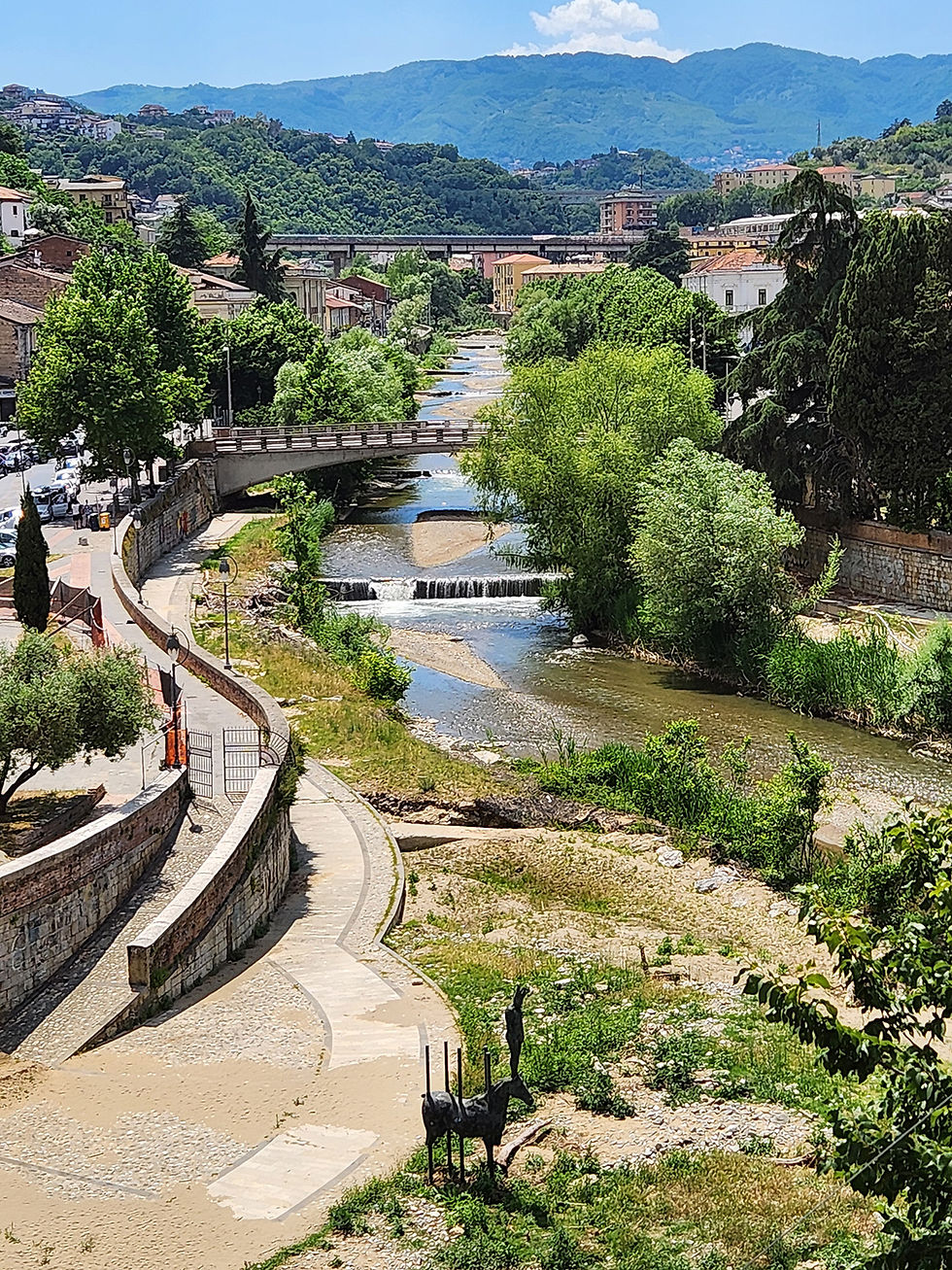
Crossing the Busento tributary (beneath us lies Alaric's tomb and his lost treasure) at the Pont dei Pignatari, we then marveled at the Duomo di Santa Maria Assunta, a majestic UNESCO World Heritage-listed cathedral. Originally built on the rubble of a structure destroyed by a massive earthquake in 1184, the cathedral's façade features three impressive rose windows. The breathtaking interior houses a beautiful mural-filled altar and several fascinating chapels, including the funerary monuments of Henry VII and Isabella of Aragon, as well as a sacred 12th-century Byzantine icon.
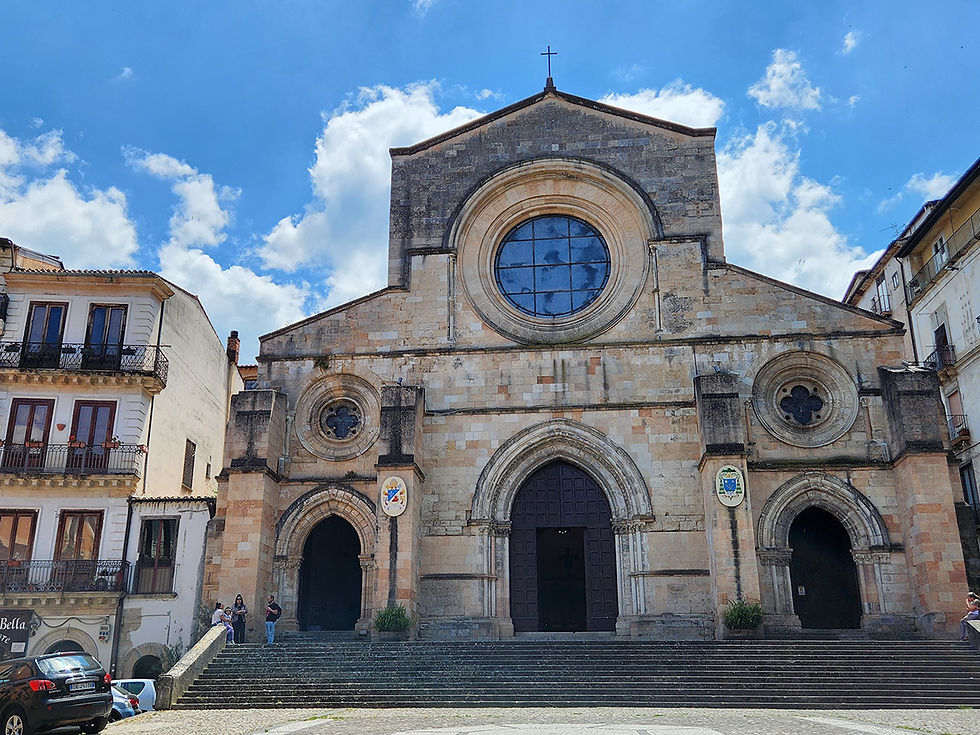
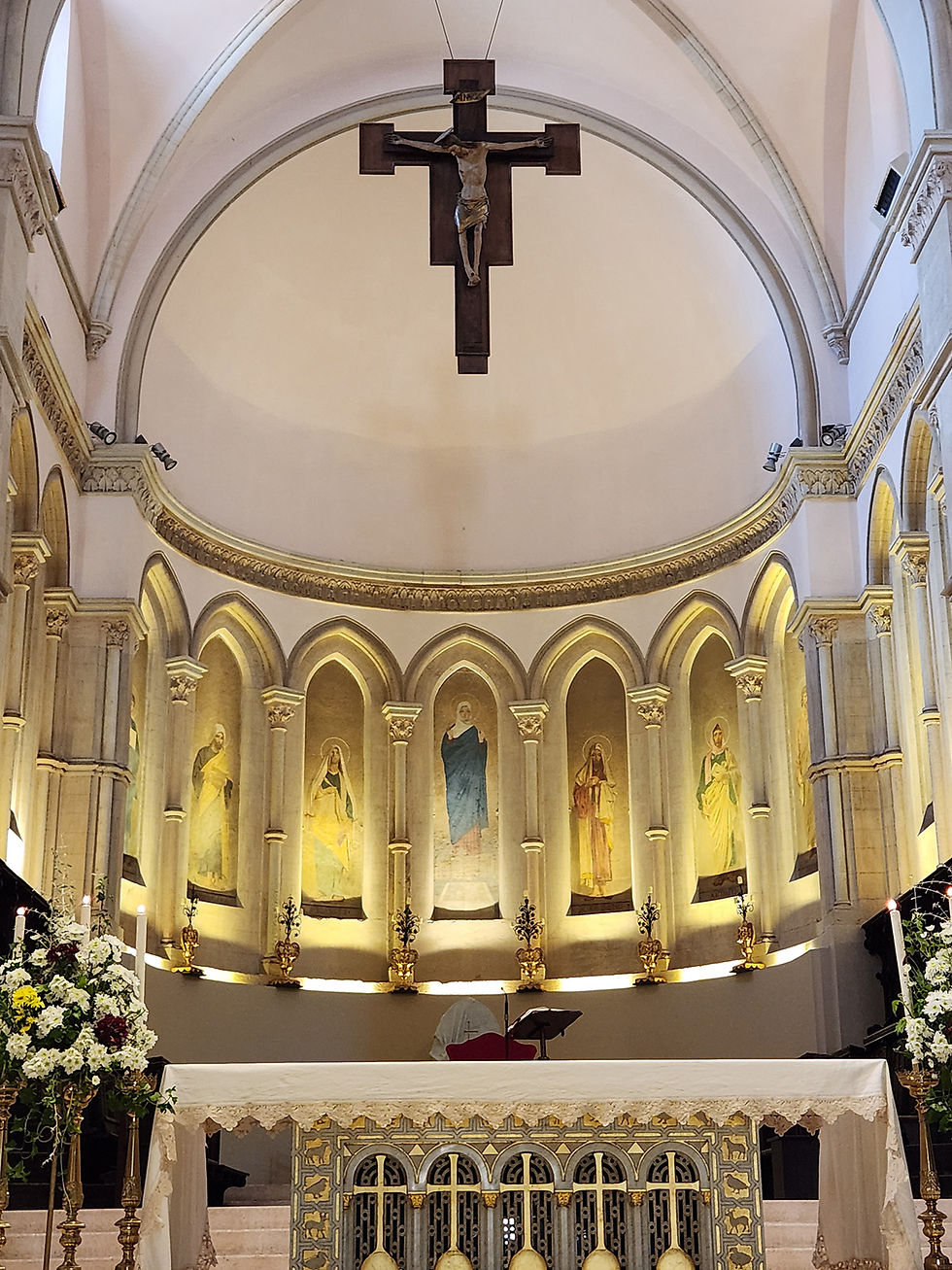
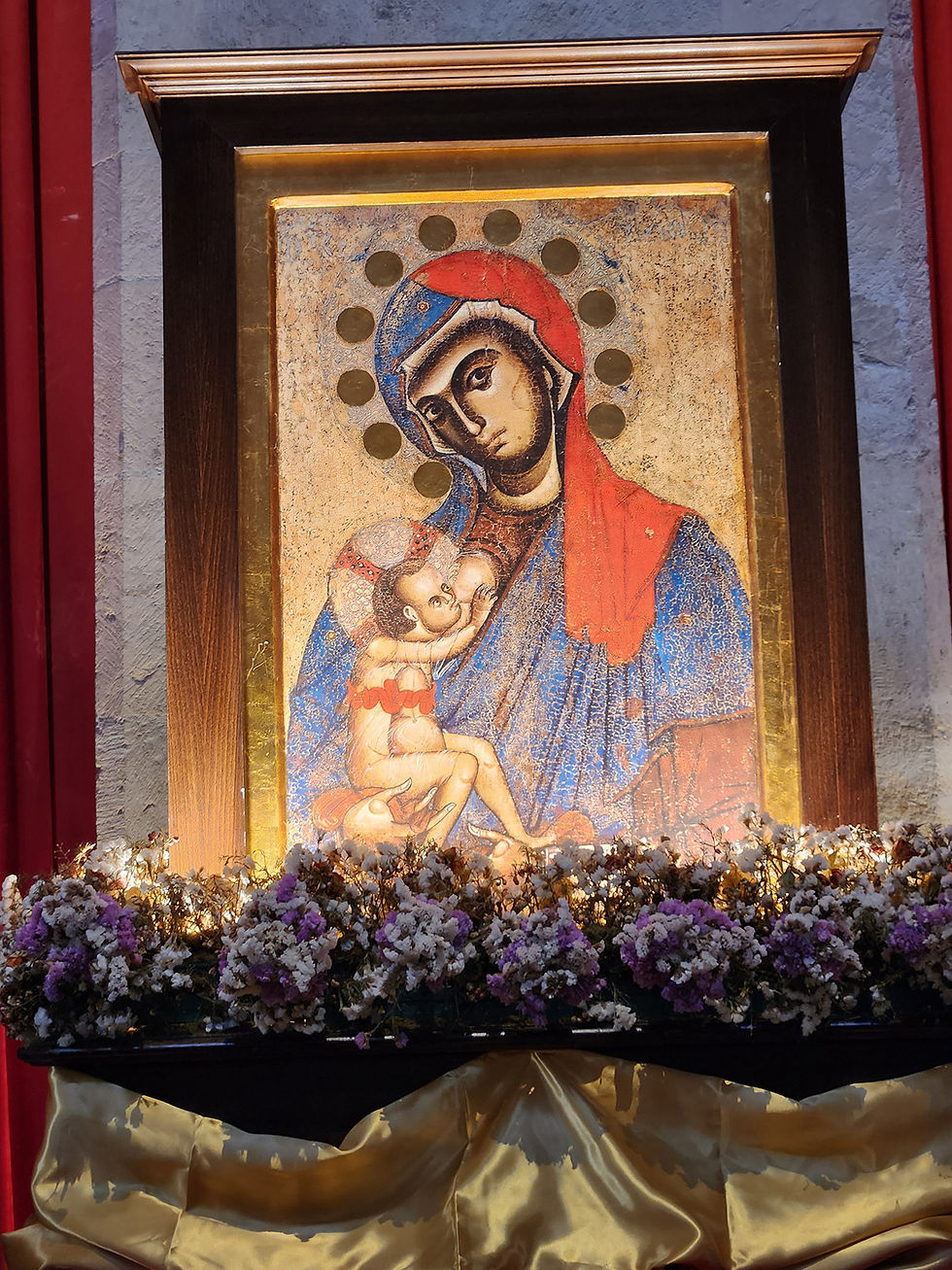
Leaving the Cosenza Duomo, we wandered uphill into the Centro Storico (Old Town). Navigating a labyrinth of fascinating alleyways and crumbling historic buildings, we snapped photos while steadily approaching Villa Vecchia. We hoped to push on to the cultural Villa Rendano before finally ascending Colle Pancrazio to the 12th-century Castello Normanno-Svevo.


However, the jumbled buildings parted and revealed a lovely plaza featuring the Gran Caffè Renzelli. Operating for over 200 years across seven continuous family generations, it is proudly among the 200 most important historic Italian cafés recognized by the Locali Storici d'Italia association, and it proved to be a delightful respite from our climb.


While enjoying a cappuccino, I decided to check the Castello Normanno-Svevo opening times and admission fees, only to discover it was permanently closed due to management issues, contract disputes, and restoration delays. Since simply viewing the city from the base of the castle lacked enough incentive to convince us to hike further up, we changed our plans. We decided to continue toward Villa Vecchia, stopping en route to admire the Piazza XV Marzo.

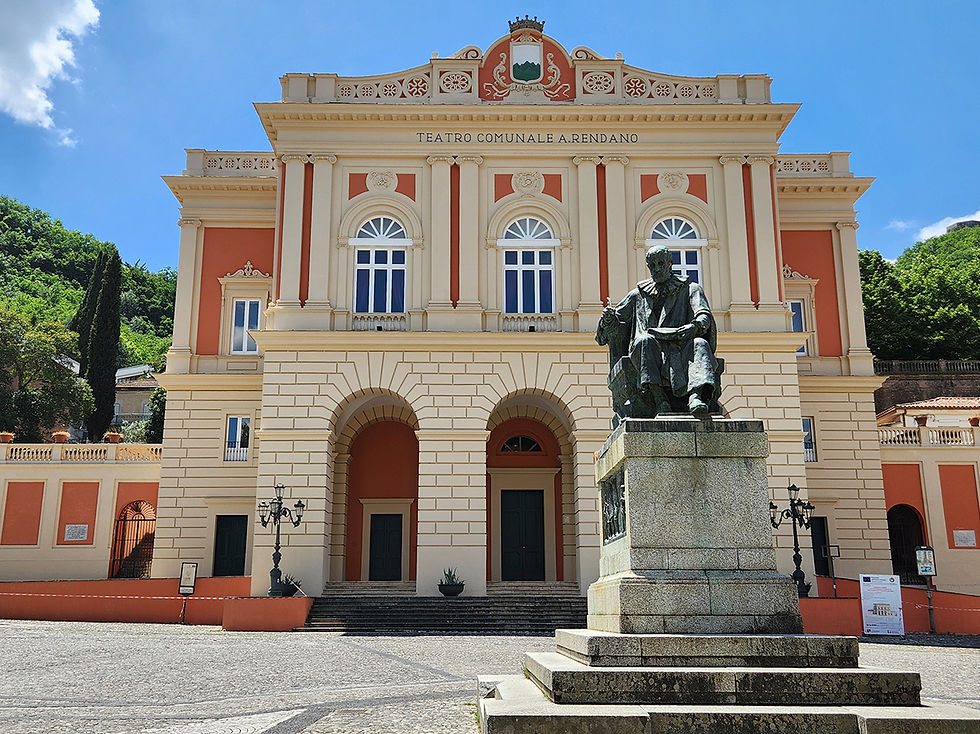
Entering the striking Piazza, we were immediately enveloped by the city's rich history. The grand Palazzo del Governo stood proudly ahead, flanked by the 19th-century Teatro Rendano. With these cultural landmarks closed on Sunday, we wandered up the hill searching for the Villa Vecchia, eventually realizing it is a peaceful green park rather than a building, complete with a fountain and shaded benches ideal for resting.

We wrapped up our afternoon by strolling over to Villa Rendano, hoping to capture its apparently gorgeous interior on camera. But alas—as you might have guessed—our plans were once again thwarted by a Sunday closure (and locked metal gates).

After winding down our day trip, we headed back to Diamante. Visiting Cosenza was completely worth the effort, featuring a fascinating open-air sculpture gallery, two lovely ancient churches, and the timeworn Centro Storico. We topped it all off with delicious refreshments at the Gran Caffè Renzelli; just be sure to avoid visiting on a Sunday so you can experience the rest of the city's attractions in full swing.
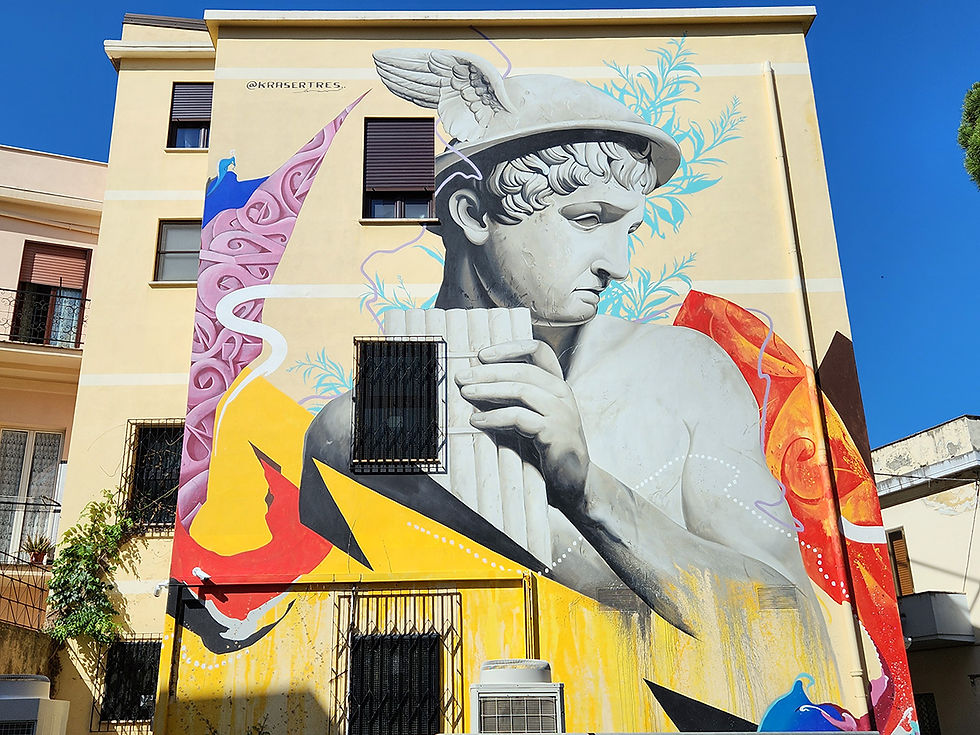
Our third day and we are back in the seaside town of Diamante; the true highlight is the city's wonderful open-air museum. Known as "the City of Murals", this vibrant tradition began in 1981 through the vision of Milanese painter Nanni Razzetti and then-Mayor Evasio Pascale. By inviting 83 Italian and international artists to paint the old town's walls, they successfully launched Operazione Murales. Today, the collection boasts over 300 stunning artworks. Over two days, Tina and I crisscrossed the labyrinth of cobbled alleyways, photographing as many of these awe-inspiring pieces as possible. The artistic variety is incredible—from traditional Calabrian life and the local fishing industry to the hardships of migration, abstract designs, and local mythology, the imagery is as rich as it is breathtaking.

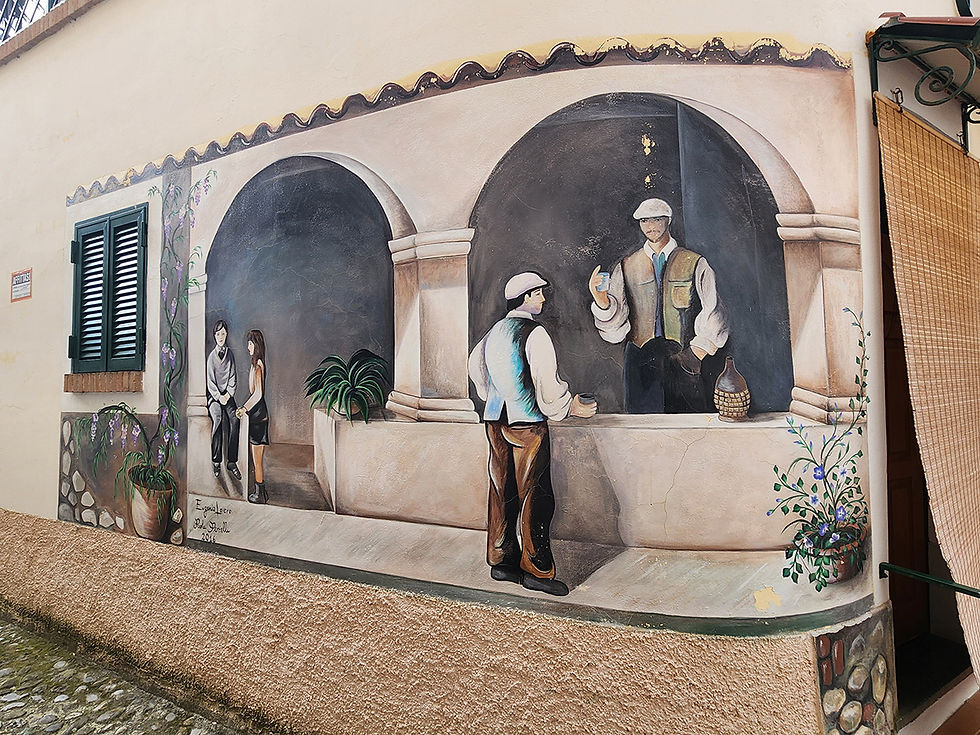

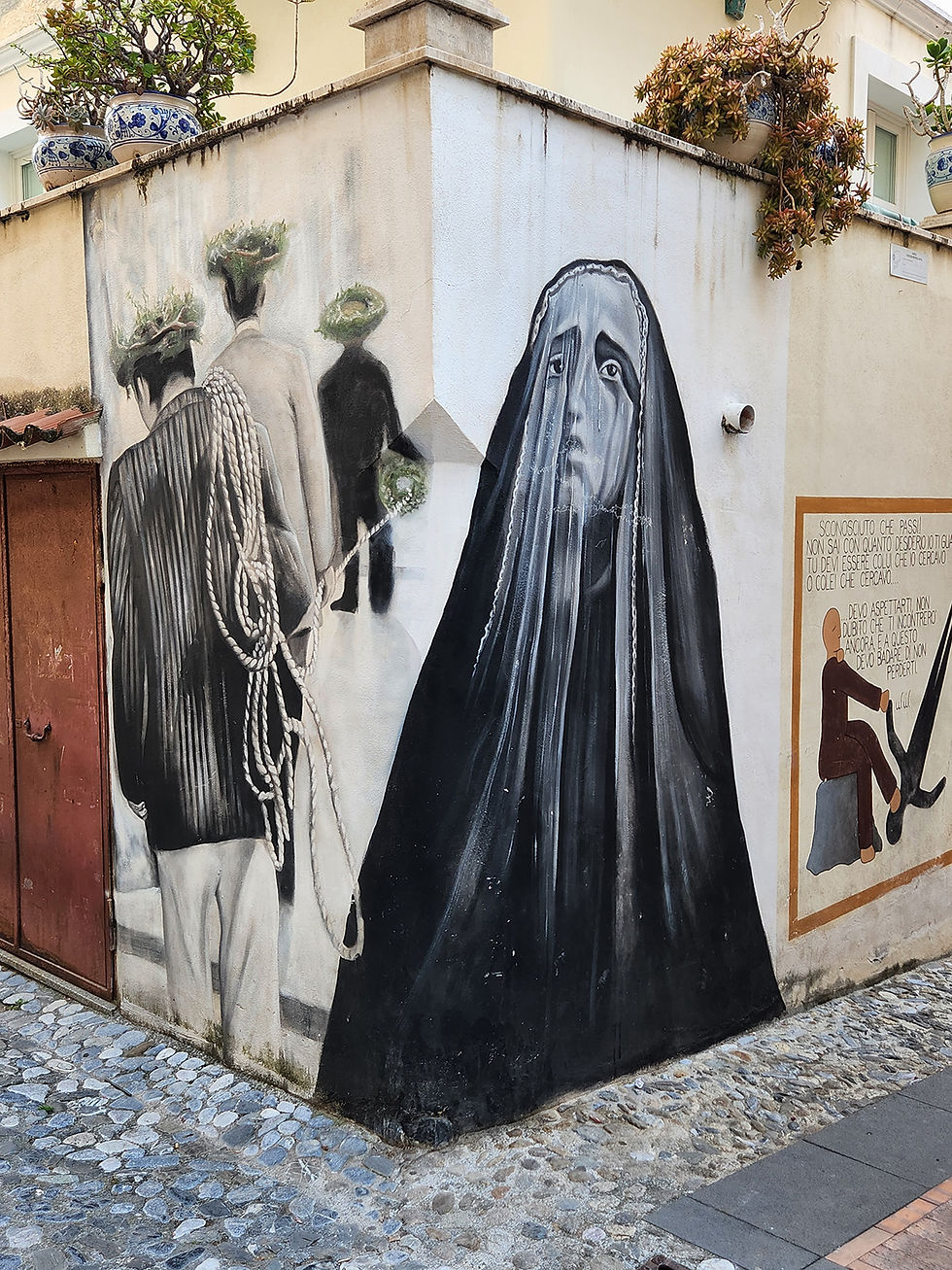
While the newest artworks in Diamante continue to dazzle with their superb quality, many of the original 1981 masterpieces—born from Nani Razzetti’s legendary "Operazione Murales"—are unfortunately fading and crumbling, painted directly on weathered plaster and exposed to coastal elements for over 45 years they are regrettably crumbling and in dire need of restoration.


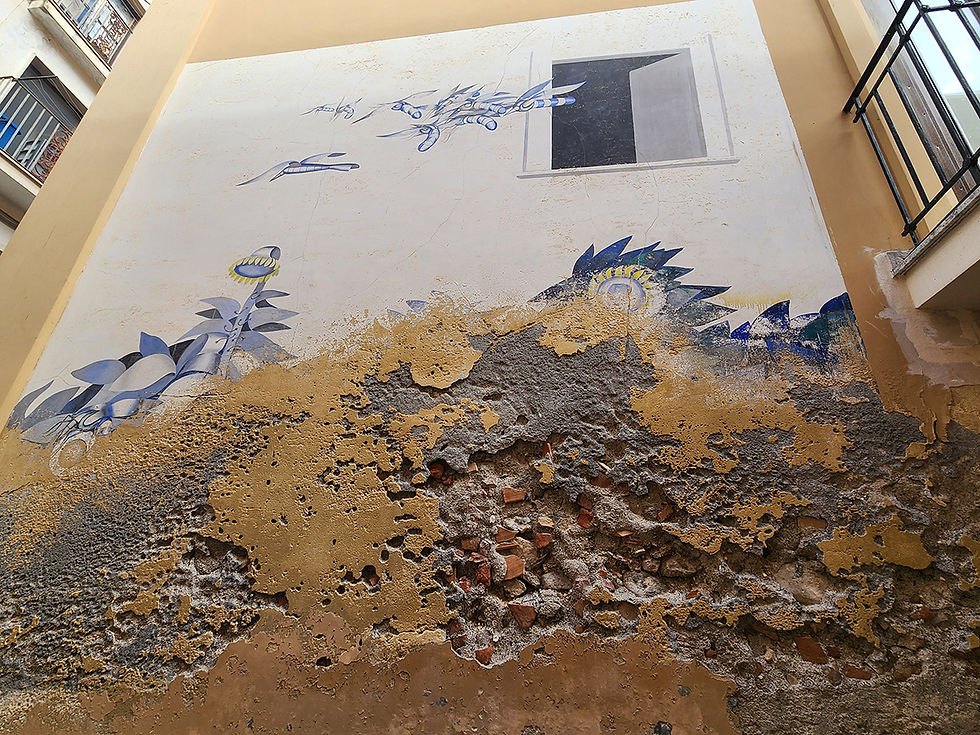

The restoration of Diamante’s older murals presents a deeply complex challenge. While the city has made commendable preservation efforts—most notably local artist Antonino Perrotta’s 2021 “Save the Murals” initiative and ongoing works by Operazione Street Art (OSA)—saving these aging works from sun and sea-salt degradation requires meticulous conservation techniques. Many of the original pieces were painted directly onto a heavy coating of whitewash. Although this provided a flat, white canvas, the lack of a proper bonding primer means the plaster absorbs moisture and separates from the underlying stone, leading to severe cracking and blistering. Funding such a massive, village-wide restoration is prohibitively expensive; without the backing of a major national heritage organization, these vibrant fragments of southern Italian culture may soon be lost to time.


Setting up our home base in Diamante along the Tyrrhenian coast proved to be a life-enriching experience. While our mid-May visit offered a peaceful, tourist-free escape, beachgoers should hold off until mid-June; furthermore, if you plan to explore the broader Calabria region and specifically Cosenza, be sure to avoid Sundays. As for my memory of Diamante, I keep seeing this haunting street mural depicting a young, sorrowful boy quietly imploring salvation before his image fades into time.


Comments