
Day 10 - From Bari to the Baroque: A Hectic Start to Our Salento Adventure.

Leaving behind the vibrant street scenes and unforgettable focaccia of Bari, we prepared for the next leg of our Southern Italian journey: Lecce. If there is one thing we have learned, it is that travelling in Puglia is all about expecting the unexpected. What was meant to be a simple 10 am train ride turned into a dramatic Italian melodrama, featuring a wildly overbooked train, desperate commuters, and a rush-hour crunch that gave us a true, raw taste of local life before we even arrived in the Salento Peninsula.

Known as the "Florence of the South," Lecce is a spectacular masterpiece of honey-hued Baroque art tucked away in the heart of Puglia. Its history stretches back to the ancient Messapians, though it truly flourished under Roman rule, becoming the city of Lupiae. This ancient name is key to the city’s identity; today, the town logo and official crest features a she-wolf (lupa) standing beneath a holm-oak (ilex), a nod to both the Latin heritage and the surrounding nature.

After falling to Byzantine control and reviving under the Normans, Lecce was transformed during the 17th century, where local limestone allowed architects to create an incredible, unique style of ornate architecture that defines the city today.

After a short, scenic two-hour train ride from Bari to Lecce, we settled into our cozy Airbnb before heading straight for the city's ancient gates.

We ventured into the historic center with a specific goal: to purchase the LeccEcclesiae ticket at the information center. This combined pass is an absolute must-do, as it offers a convenient and affordable way to explore the architectural splendor of several magnificent Baroque churches under one price.
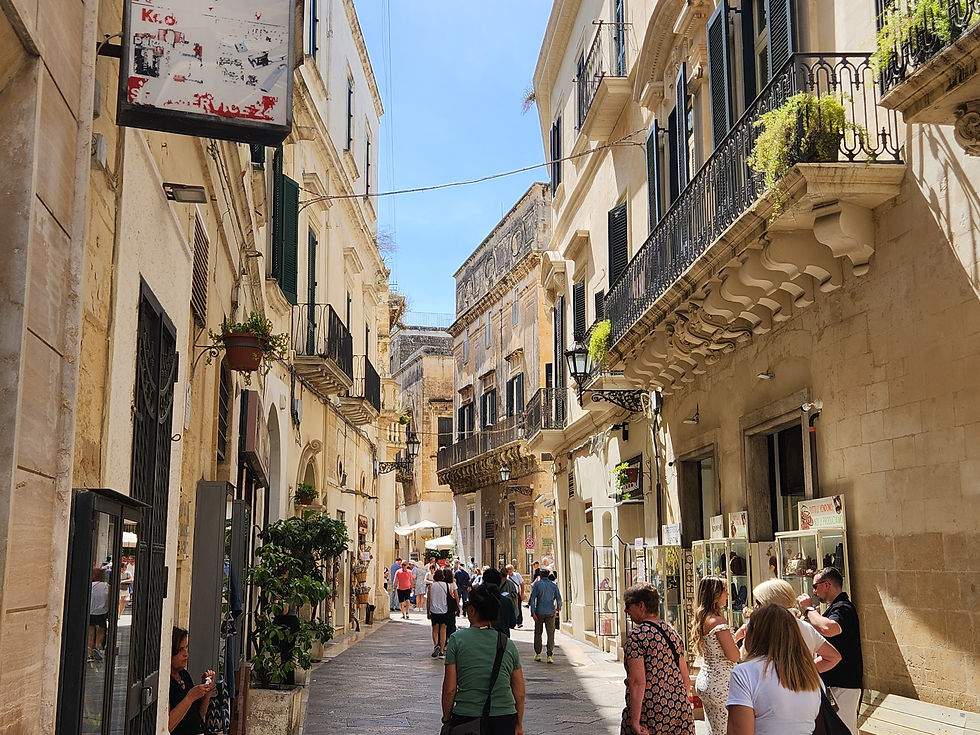
Lecce’s historic center is an impressive testament to preservation, offering a remarkably well-maintained, flat, and walkable experience that is highly accessible to those with mobility issues. Far safer and less crowded than Naples, this Baroque gem is a joy to navigate, filled with charming boutiques showcasing traditional craftsmanship and local goods.

Its streets form an intimate maze of stunning architecture, top-tier dining, and casual eateries. You could easily spend two days here just soaking up the authentic Apulian atmosphere, sipping wine or an espresso, and uncovering the splendid treasures of this captivating city.

Standing right in the heart of Lecce in the Piazza Duomo, we wasted no time putting our newly acquired LecceEcclesiae pass to use.

With the tourist information museum at our backs, we were immediately dwarfed by three magnificent Baroque masterpieces.

To the left rose the 72-meter Campanile del Duomo (1682), a stunning five-story bell tower capped with a fish-scale dome of colorful majolica tiles and topped by an iron statue of Saint Oronzo acting as a weather vane.

Directly ahead stood the grand Cathedral (Duomo) itself, flanked on the right by the stately Bishop’s Palace, complete with its elegant clock.


Facing the impressive Duomo, we are immediately enveloped by the theatrical elegance of Lecce’s Baroque heart. The Cathedral's facade, a masterpiece rebuilt by Giuseppe Zimbalo in the 17th century, is a stunning triumph of local pietra leccese—a golden, soft limestone that glows under the Apulian sun.

Unlike many traditional, sober cathedrals, this front is a luxurious display of artistry, adorned with intricate sculptures of saints, delicate floral motifs, and dramatic columns. It is not merely a wall, but a, "false façade"—a brilliant, scenographic trick designed to mesmerize visitors upon entering the square from the side, creating an immersive experience of 17th-century grandeur.

As we stepped into the Lecce Duomo it felt like entering a golden-hued treasure chest, a striking contrast to the quiet, airy space of the Piazza del Duomo outside. The interior, designed in a classic Latin cross layout, is breathtakingly illuminated by soft light, highlighting the intricate Lecce stone that dominates the walls. My eyes were immediately drawn upward to the magnificent 17th-century gilded wooden ceiling, while around me, 12 richly decorated Baroque altars—adorned with masterpieces from local artists—seemed to glow with an ethereal beauty.
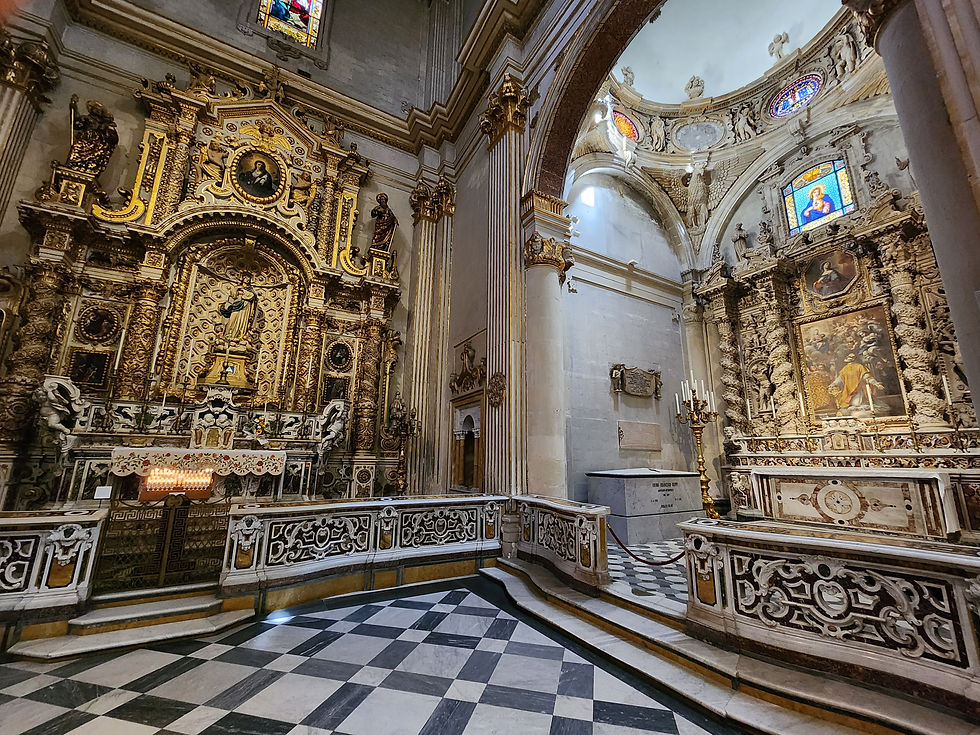

Next, we descended into the hidden world beneath the Lecce Duomo. Its crypt is a awe-inspiring, quiet space, supported by a dense forest of slender columns and filled with an almost spiritual serenity.

It was the perfect, cool pause before continuing our exploration of the city's baroque wonders.

With our food tour in Lecce fast approaching—more on that delicious experience in a moment—we wandered toward the heart of the historic center, where we stumbled upon the remarkable Roman Amphitheatre in Piazza Sant'Oronzo.

Uncovered by chance in 1901 during bank construction, this impressive, sunken excavation can be admired perfectly from street level, though for a small fee, you can venture inside for a closer look. The area is a living history lesson, with another major excavation nearby that will be fascinating to follow.

As the sun began to set at 6 PM, we gathered outside Porta San Biagio (one of Lecce's three historic city gates) to join a small group for the 'Lecce Sightseeing and Street Food Tasting Tour', hosted by the knowledgeable Antonella. This exceptional tour was a perfect blend of history, Baroque architecture, and culinary discovery, during which Antonella shared her deep passion for local culture.

She shared some fascinating insights with us, starting with the fact that these original walls were once covered in bright, painted plaster. If you look closely, you can still see the chisel marks left by masons who roughened the stone to make the plaster stick.

Sadly, this plaster absorbed moisture over the centuries, causing it to swell, blister, and crumble away—a process that is as dangerous as it is costly to repair.

Weathering causes sandstone to erode, requiring repairs to more exposed areas. These repairs are easily distinguished from the original, weathered stone.

Another interesting detail she pointed out was the 'upside-down wreath' held by a cherub. It’s actually a loaf of bread, symbolizing a miracle where an old woman, having prayed with an empty stove, was visited by an old man knocking at her door—some say Jesus himself—who told her to check her oven, where she found the bread. Today, locals celebrate with a wreath-shaped loaf of bread featuring a cooked egg in the center.

We wandered through charming streets, stopping at artisan vendors to sample a variety of savory and sweet delights, paired with a lovely local wine.

Capping off an incredible evening with authentic artisan gelato, we couldn’t have asked for a better introduction to Puglia's flavors—buon mangiare indeed!.


Comments