4 Days in Tropea: A Photography-Focused Southern Italy Itinerary (May Guide ) part 1

Updated: Jun 2
"So, why Tropea?" When I first started planning our Southern Italy trip, my heart was set on the classic heavy-hitters: Rome, Naples, and the Amalfi Coast. But I also longed to discover an authentic, lesser-known Italian town where I could escape the crowds and immerse myself in the local culture. After a bit of research, Tropea—with its intriguing mythological roots, warm Tyrrhenian waters, and reputation as a favorite Italian getaway—seemed to fit the bill perfectly.

Little did we know that Tropea was crowned the ultimate "Borgo dei Borghi" in 2021 (Top Village of ALL the villages in Italy). That kind of elite reputation spreads like wildfire, so arriving here today, it is no surprise to find the town absolutely bursting at the seams with international travelers. It’s a beautifully vibrant, if slightly bustling, city.
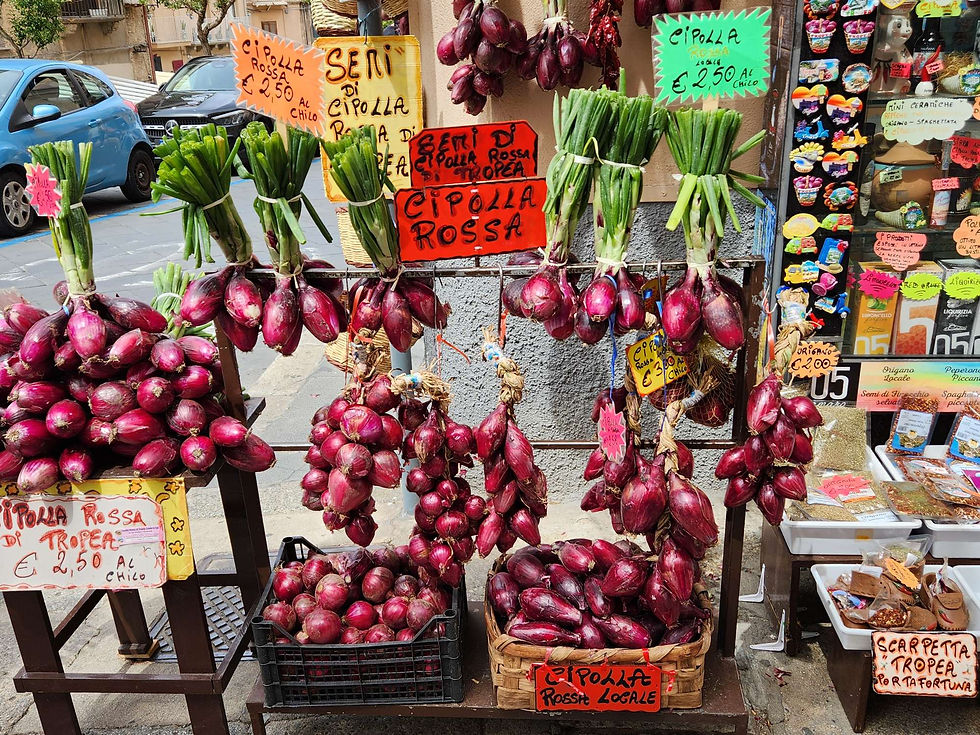
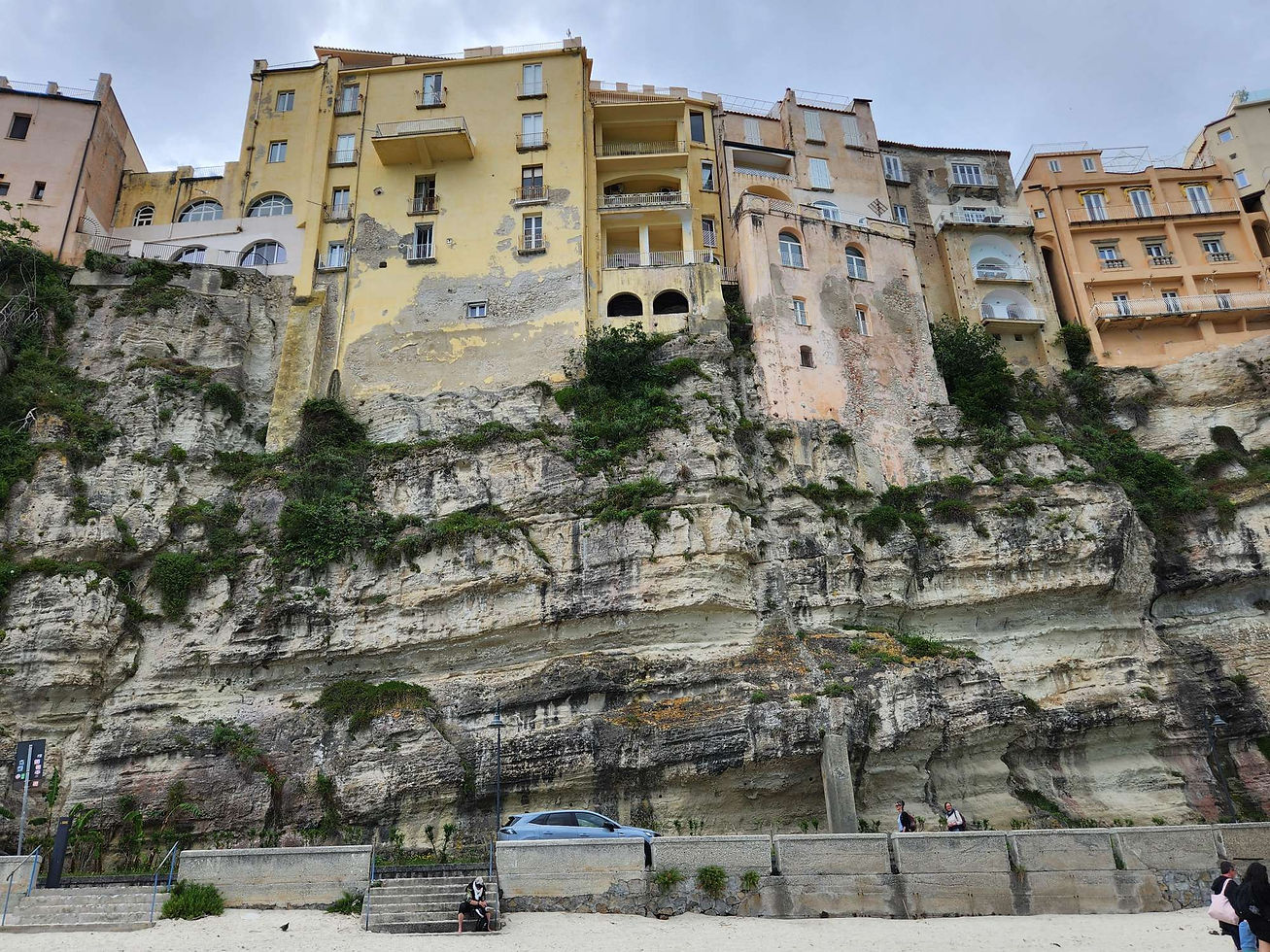
Nicknamed both "The Pearl of the Tyrrhenian Sea" and "The Little Athens of Calabria," Tropea rests in the Vibo Valentia province (the smallest of five) of Calabria—the very toe of the Italian boot. We set out to explore the sun-drenched alleys, historic architecture, and breathtaking coastlines to discover exactly why this gem is celebrated as the best village in Italy.

It is worth mentioning that we are traveling in mid May and May is proving to be an amazing time to travel in Southern Italy. We woke to another glorious day of sunshine, starting at a pleasant 17°C requiring just a light jacket (for us older travelers) and climbing to 23°C perfect t-shirt weather. Our backpacks are packed with both lightweight rain gear (just in case) and good sunscreen. The scent of jasmine fills the air, and the trees are heavy with bougainvillea clusters and ripening lemons, limes, oranges, and figs. While it may not be quite warm enough yet for a dip in the Tyrrhenian Sea, the sunbathers are already claiming their spots on the sand.

We started our morning with a delicious Italian breakfast in a bright, sunny dining room overlooking a family-run garden complete with chickens, lemon trees, and strawberries. As I sipped my second cappuccino and gazed out at the turquoise Tyrrhenian Sea from the balcony, I realized I was completely relaxed and absolutely loving this holiday.

I don't usually do this, but if you are looking for the perfect place to stay, consider booking the AirB&B 'Serviced Apartment in Tropea' hosted by Angelo. It is a beautiful, private, and spacious property. They offer breakfast (Italian or English) and dinners designed daily from their own garden produce. But back to exploring Tropea!
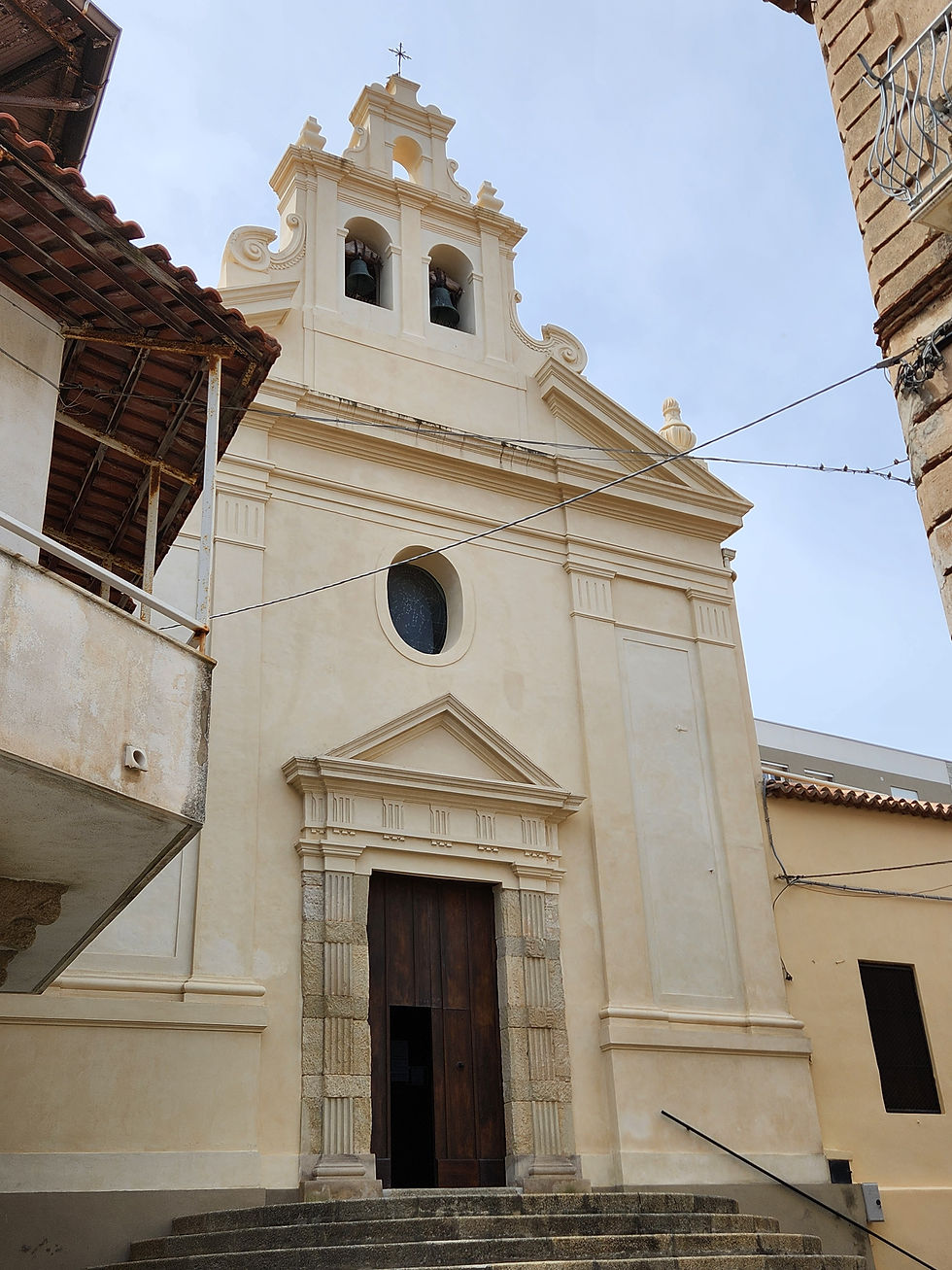
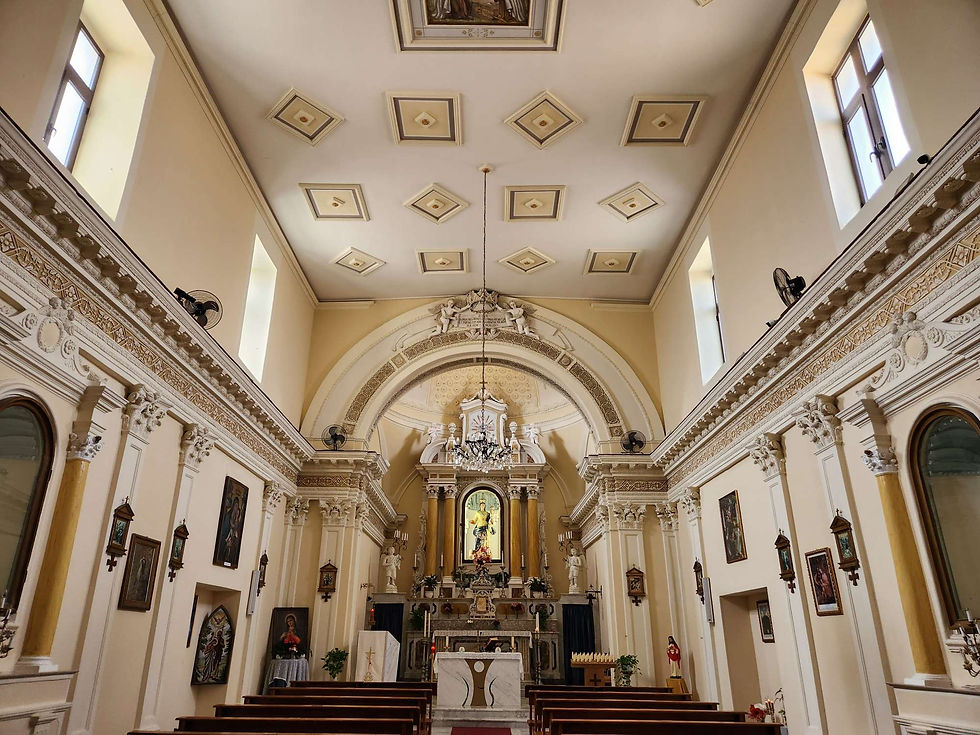
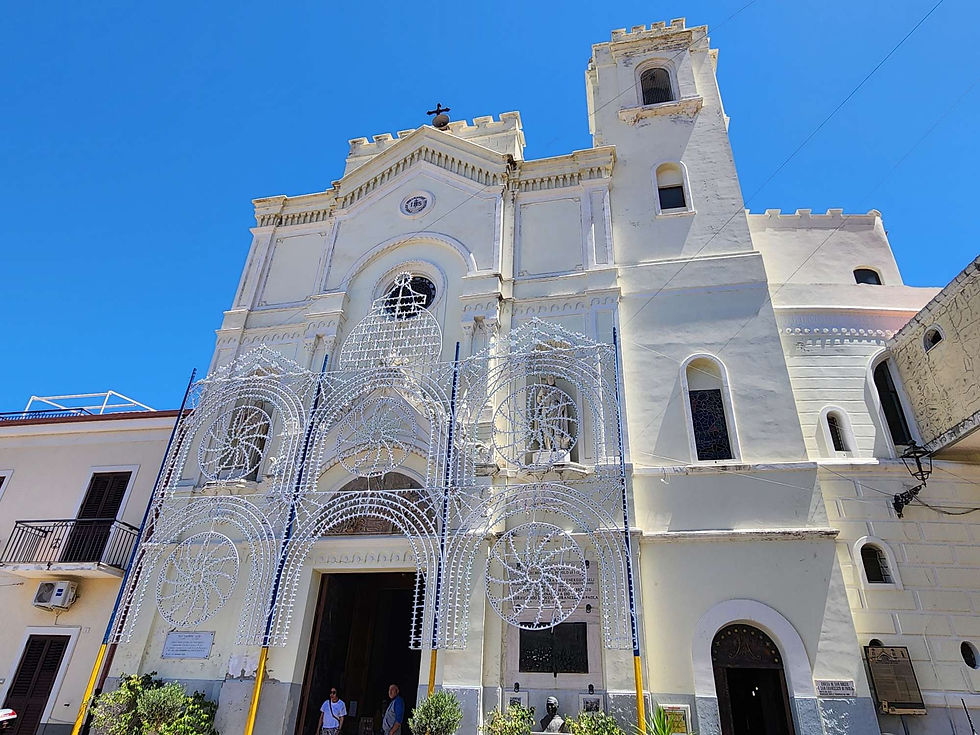
As we began our stroll toward town, we stumbled upon the Chiesa della Madonna del Carmine, a charming little church with roots stretching back to 1321. Like much of Southern Italy, it suffered severe damage during the catastrophic 1783 earthquake. Over the years, the building was suppressed and even repurposed as a prison during the French occupation, before finally being beautifully restored and reconsecrated for worship in 1864.
After a serene visit to this lovely small church, our stroll toward Tropea's historic center abruptly plunged us into chaotic, tourist-crammed streets alive with bustling shops, cafes, and restaurants.

If my photos seem tranquil, it is only because I am a patient photographer. I waited for fleeting lulls or shot above the crowds to capture those quiet moments of Southern Italian magic. Trust me, Tropea is packed—even in the shoulder season! 😨

As we continued to meander through the spotless, well-maintained streets of Tropea’s ancient quarter, the historic stone pathway suddenly gave way to a dramatic precipice. Before us stood the striking Santuario di Santa Maria dell'Isola, perched atop an awe-inspiring sandstone cliff rising directly from the Tyrrhenian Sea.
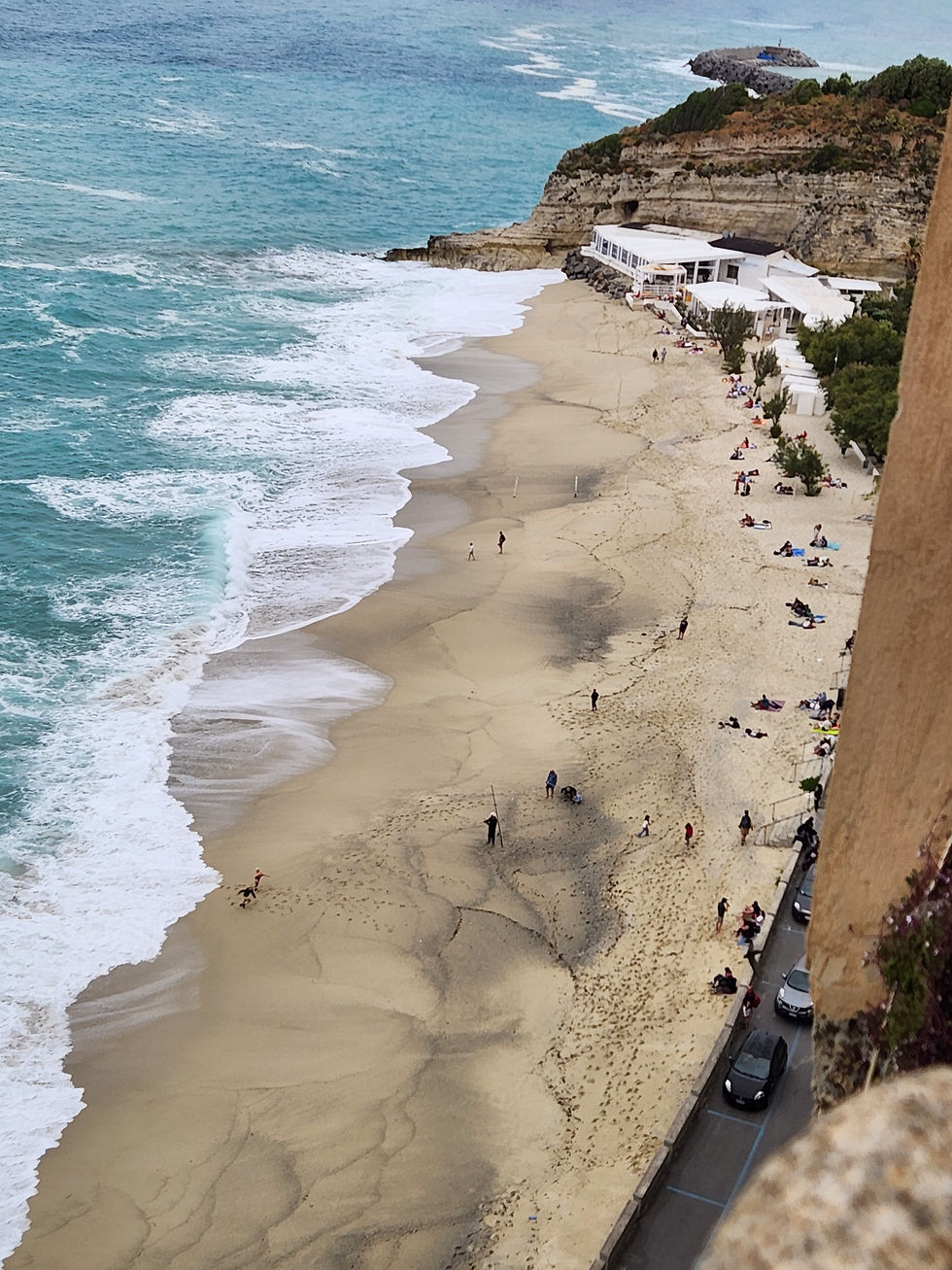
Below, the pristine sands of Spiaggia della Rotonda—widely celebrated as one of the best beaches in Calabria—curve gently along the coastline, dotted with relaxed sunbathers. This sweeping vista captures the quintessential, picture-perfect essence of Italy.
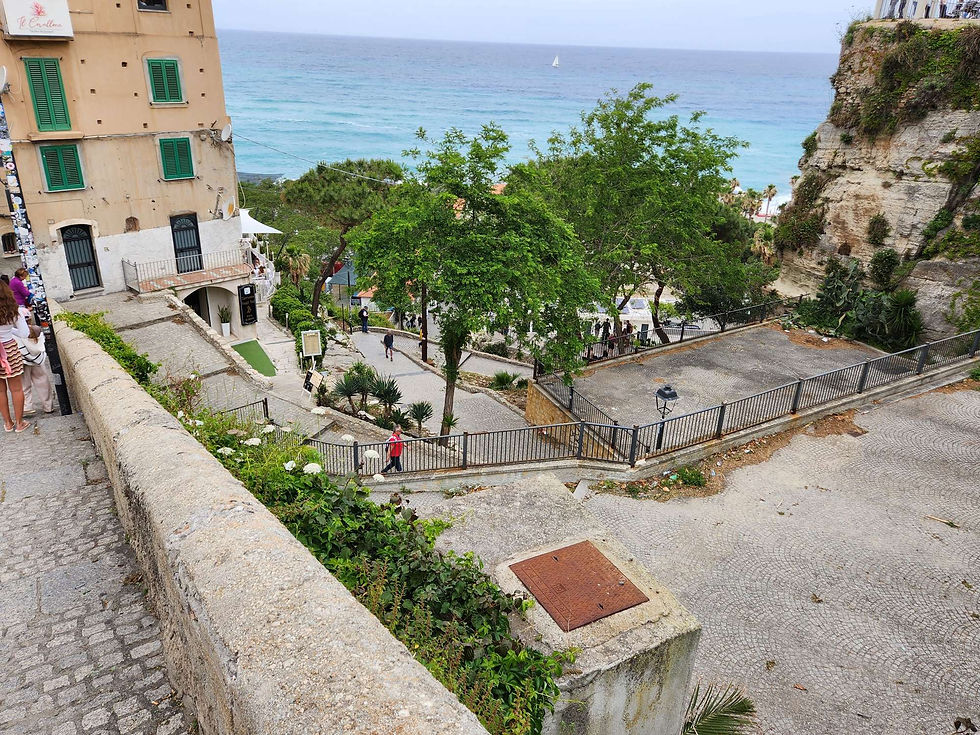
Our goal for the day was finally within reach: the iconic Santuario di Santa Maria dell'Isola. Within minutes, we navigated the staircase heading down to the road and crossed the bustling street to face the steep, zig-zagging steps ascending the rockface.

Paying the €3 admission fee, we passed the turnstile and climbed the final flight of stairs.


To our surprise, the sanctuary proved to be quite intimate—essentially a single, simply yet reverently decorated room that opened onto a breathtaking cliffside garden.


The sweeping coastal views were absolutely unbelievable, providing the perfect, picture-worthy background for a memorable selfie.

Or maybe two...

After conquering the hundreds of steep steps to the Sanctuary, we then had to return, and there was only one way to recover: indulging in a traditional Tartufo di Pizzo.
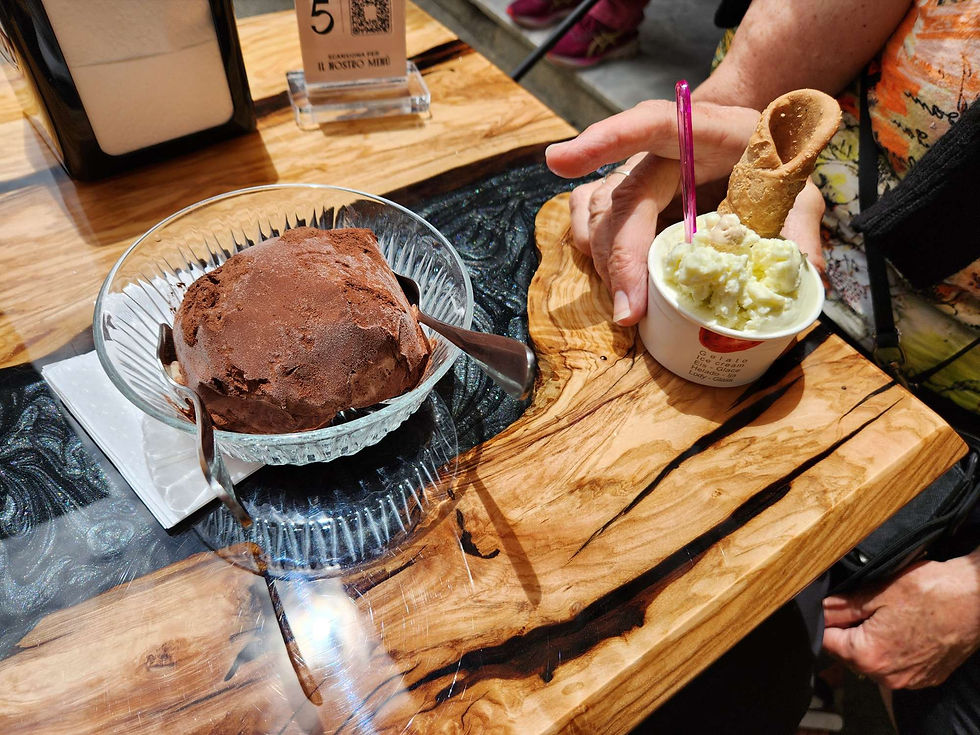
This heavenly, dark-cocoa-dusted treat features a rich hazelnut and chocolate shell wrapped around a molten chocolate core. It tastes every bit as magical as it sounds.

After savoring a decadent Tropea Tartufo, we spent a leisurely late afternoon wandering the shops along the main streets of Tropea.

Returning to our retreat, we capped off a truly flawless first day with an exquisite, chef-prepared dinner that proved as breathtaking as it was delicious. Tomorrow we catch a train to Pisso!

For our second day while staying in Tropea we ventured on a short day-trip to the picturesque fishing town of Pizzo—not to be confused with a certain northern Italian pie! Between its dramatic Aragonese castle, the unique sandstone cave church of Piedigrotta, and its sweeping beaches, it easily won us over. But the true clincher? Tina's love for beachcombing and the town's famous claim to fame: inventing the decadent Tartufo gelato.

While planning our visit to Pizzo I began by researching the unique Chiesetta di Piedigrotta and I discovered visitors must email ahead to arrange a time.
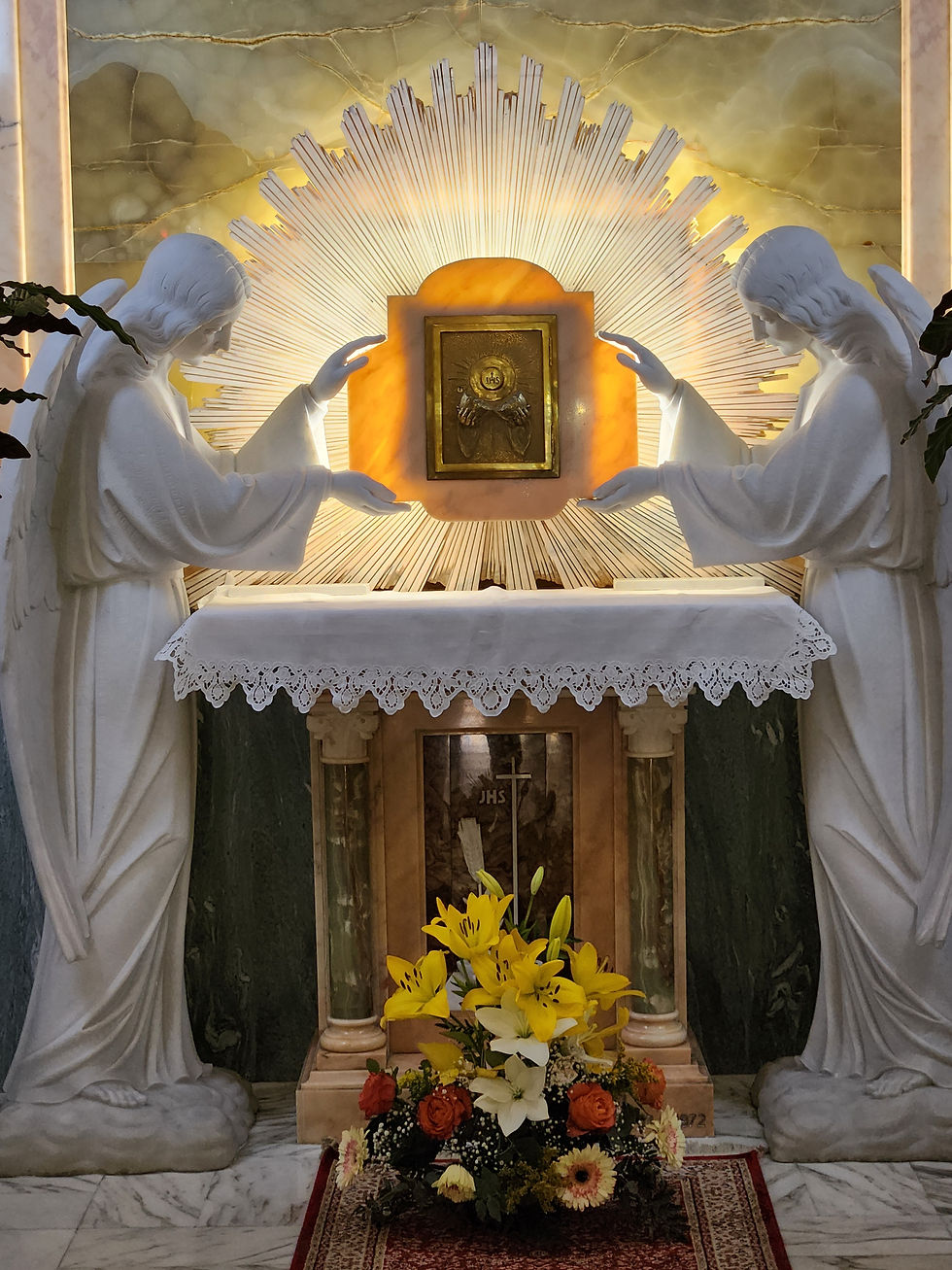
Unfortunately, they declined our entry for that particular day, citing that only large groups were being accepted. I suspect this meant they have succumbed to allowing large third-party platforms to purchase block tickets for online resale. Capitalism at its best.
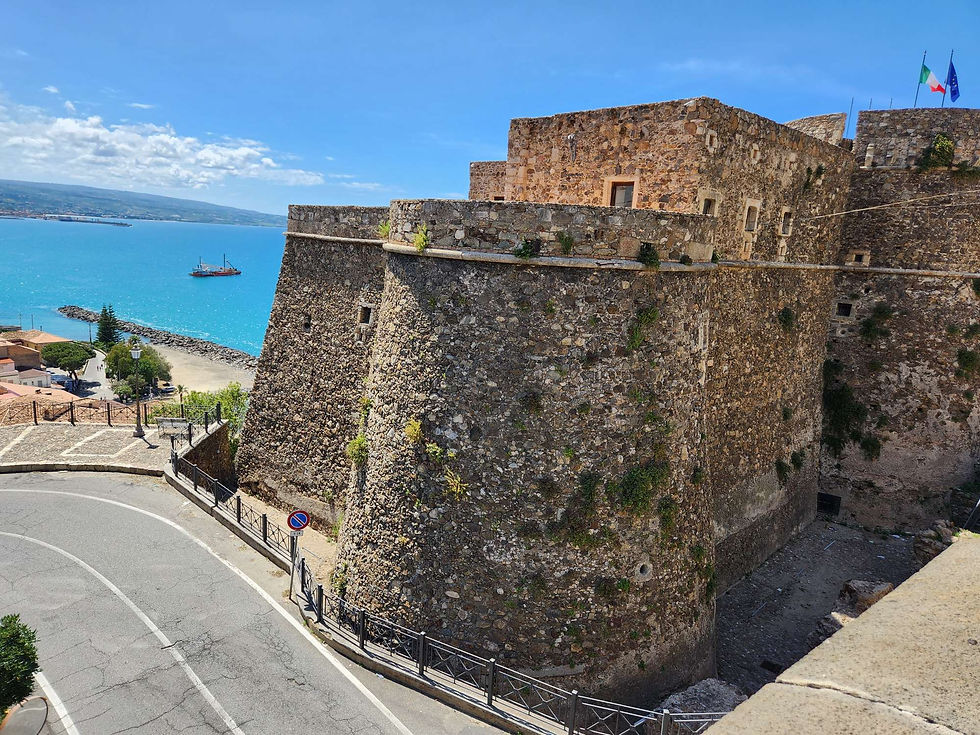
Undeterred by my inability to visit the iconic cave church in Pizzo, I shifted my focus to exploring the town's historic Aragonese castle.

Commissioned in the 15th century by Ferdinand I of Aragon to protect the coast from pirate raids, the fortress enjoys a dramatic vantage point. In fact, "Pizzo" means "beak" or "projecting point" in the local Calabrese dialect, making it the perfect strategic location.
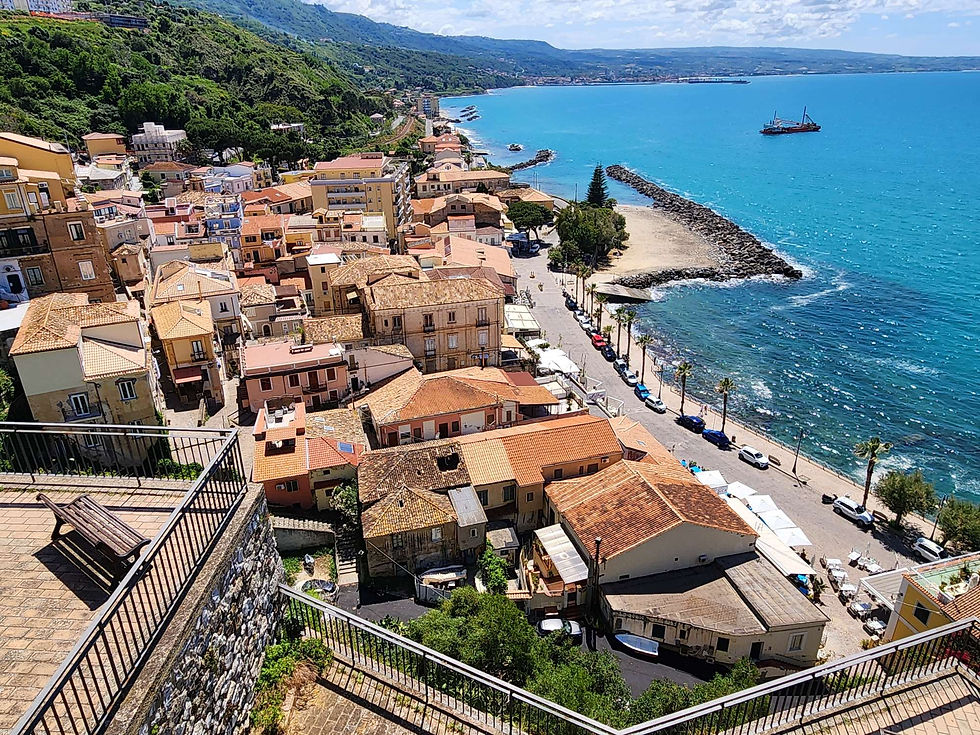
However, after combing through several internet sites, I found conflicting information regarding opening times. Upon arriving today, our hopes of a tour were dashed when we discovered the time slots on the signage had been covered over: the castle was closed. Before your trip, be sure to check the current schedule with the Castello Murat website.

Although we missed touring the Aragonese Castle (Castello Murat) and booking the Chiesetta di Piedigrotta, we absolutely fell in love with Pizzo. The exterior of the castle served as a stunning backdrop for our vacation photos; strolling through the charming, narrow alleys, browsing local shops, and relaxing at cozy cafes and restaurants made for a fabulous day in Southern Italy.


And let us not forget the Tartufo gelato! Upon entering the village’s main plaza, we were quickly greeted by a charming, charismatic individual who is both a local guide and a waiter for the gelateria claiming to have "created the original Tartufo".
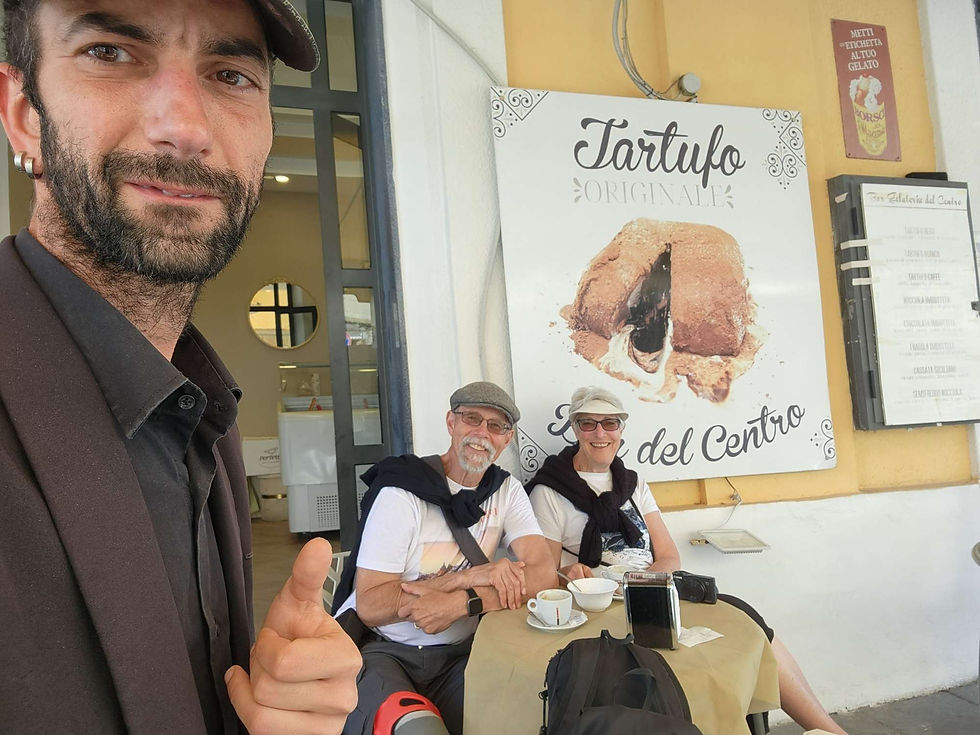
We spent a fascinating few minutes listening to him proudly recount his hometown's history before he pointed us toward the old town. He sent us off with a warm smile, but not before we promised to return for a treat at his establishment. We eagerly followed through on that promise and highly recommend Bar Gelateria Dek Centro for a perfect Tartufo.
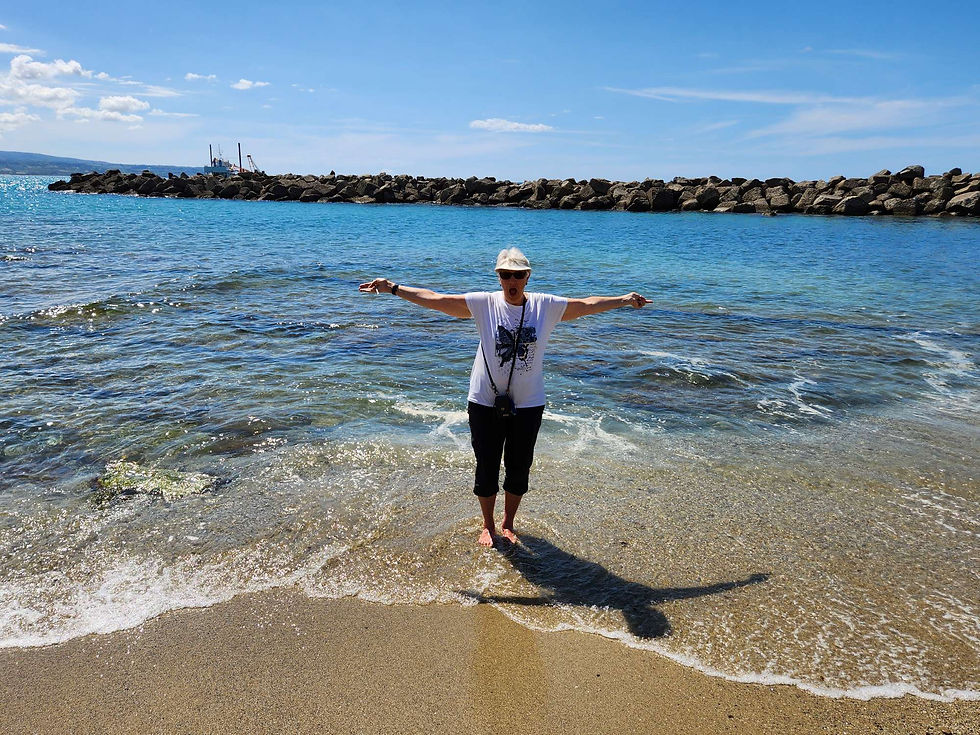
Our day-trip to Pizzo was absolutely spectacular. The highlight of the excursion was watching Tina spend several hours blissfully beach-combing along the pristine, sun-drenched shores of the Tyrrhenian coast, completely immersing herself in the natural beauty of Southern Italy.
This blog is continued in part two.


Comments