Day 6 Walking Tour of Southern Italy: Bari

After a good night's sleep and a carefully wrapped bandage for my throbbing injured big toe, we were out the door, two cappuccino andare (to go) in hand, ready to explore Bari. Once again, our early May weather was outstanding; mornings start at a pleasant 18C and rise to a gorgeous 21-24C in beautiful sunshine, making it the perfect temperature to wander the historic streets.
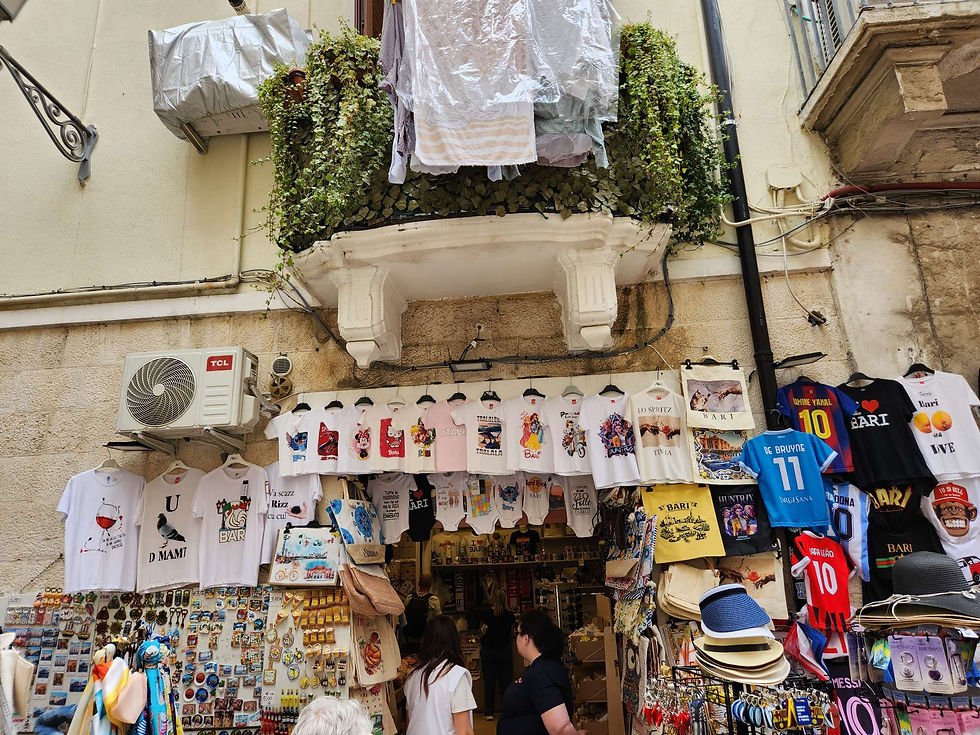
If you are planning a trip to Southern Italy and are deciding on which towns to visit, Bari offers several distinct advantages that make it a perfect base. Unlike the uneven, hectic streets found in cities like Naples, Bari is wonderfully level, featuring well-constructed, flat stone tiles that make maneuvering luggage and navigating the city remarkably easy. The charming alleys and side streets of the Bari Vecchia (Old Town) are spotlessly clean and well-maintained with very little graffiti, providing a pleasant experience for strolling. For visitors with mobility issues, strollers, or young families, Bari offers a stress-free environment that is easy to navigate.

Another interesting comparison between Bari and Naples involves food; or more specifically, pasteries. In Naples, the main tourist streets were lined with banks of display cases filled to overflowing with forty or fifty different types of sweet creations, with bakers constantly refilling the dwindling stock with trays full of heaping delicacies, huge specimens oozing pistachio cream or lemon or cherry.

In Bari, the pasticceria seem to specialize in one or two and only display a dozen or so. It makes me wonder what nationality Naples caters too.
After our coffees we noticed a shop named Alberto Mucci, carrying confetti alla mandorla: sugar-coated chocolates with either liquid fillings (limoncello, sambuca) or "mon-amour" (almonds/hazelnuts with double chocolate). We asked the signorina to select small samples from a half dozen of the over 30 flavors 😋... we will eat 3 or 4 each day as a treat.

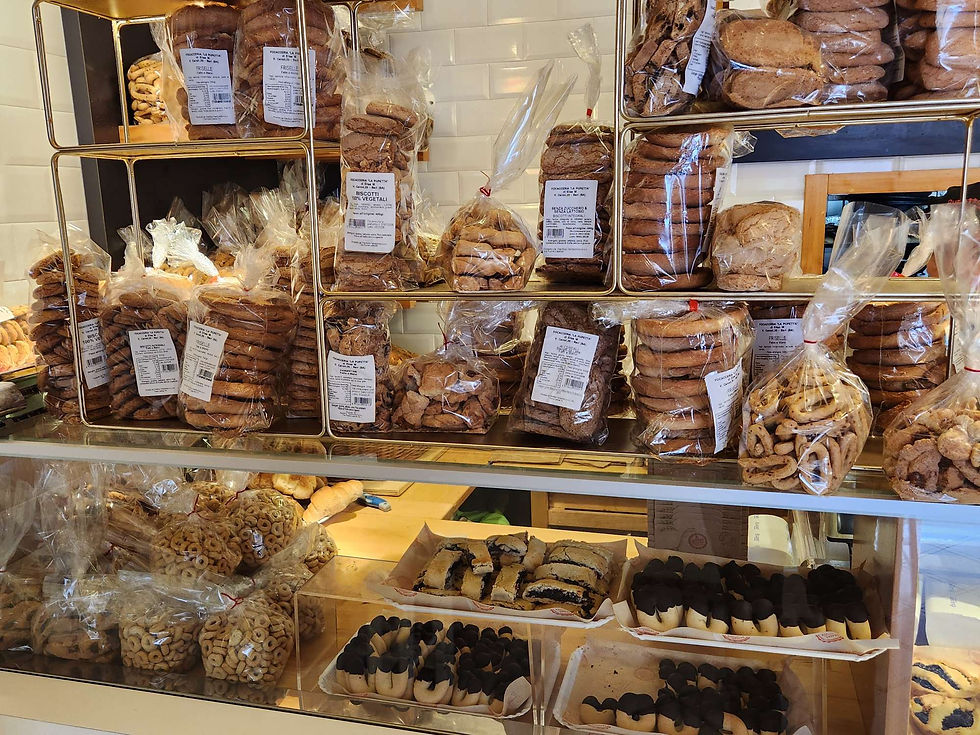
Before we knew it, a second specialty shop in Bari—La Pupetta—drew us in for a better look, specializing in the legendary Focaccia Barese (a traditional Bari street food), but instead, we left munching two of the best cherry tarts we have ever eaten, and we absolutely have to come back to try the classic Focaccia.


As we munched on flaky, sweet cherry tarts we headed straight for the heart of Bari’s tourist action. Lined with tempting trattorias and vibrant cafes, the lively pedestrian street Corso Vittorio Emanuele II cut boldly through the city's 19th-century grid, bringing us face-to-face with a truly striking piece of modern art: the bronze sculpture "Cavallo con Gualdrappa" (Horse with Caparison) by Mario Ceroli. This recognizable, highly stylized horse, a gift from a local bank in 2003, stands as a captivating contrast to the bustling, traditional surroundings.

Moving from the new town towards the old, we stepped into the quiet ambiance of our first church, the Chiesa di San Domenico, a stunning example of history nestled in the heart of Bari dating back to the 13th century.


Exiting the Chiesa di San Domenico, we lost ourselves in the beautiful old town alleys,

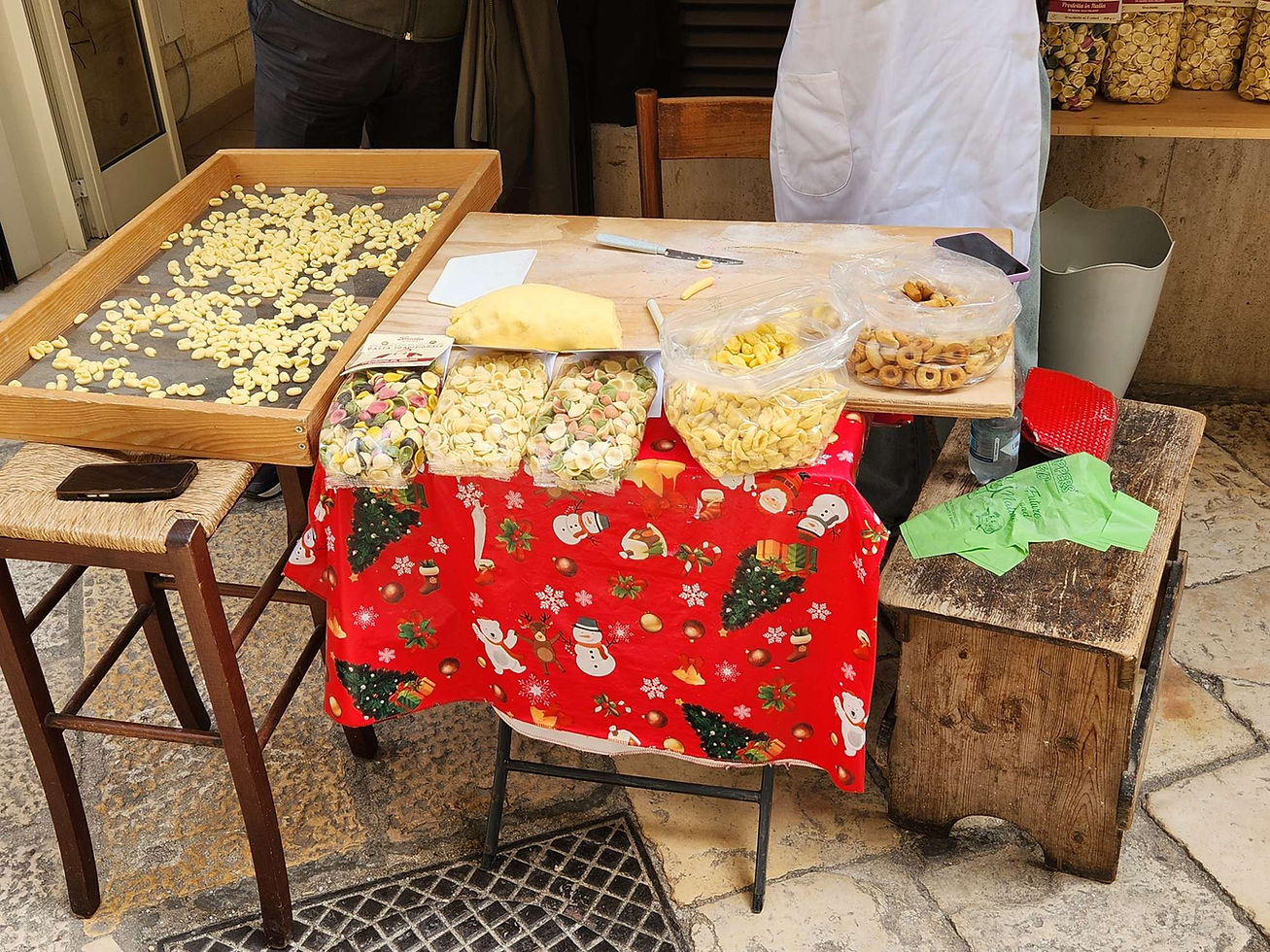
photographing postcard-perfect scenes around every corner until we stumbled upon the famous Strada delle Orecchiette ("Ears" Pasta Street).

Here, the "orecchiette" pasta—so named for its distinct little ear shape—has been meticulously handmade for generations by local women who set up wooden tables right outside their doorways.
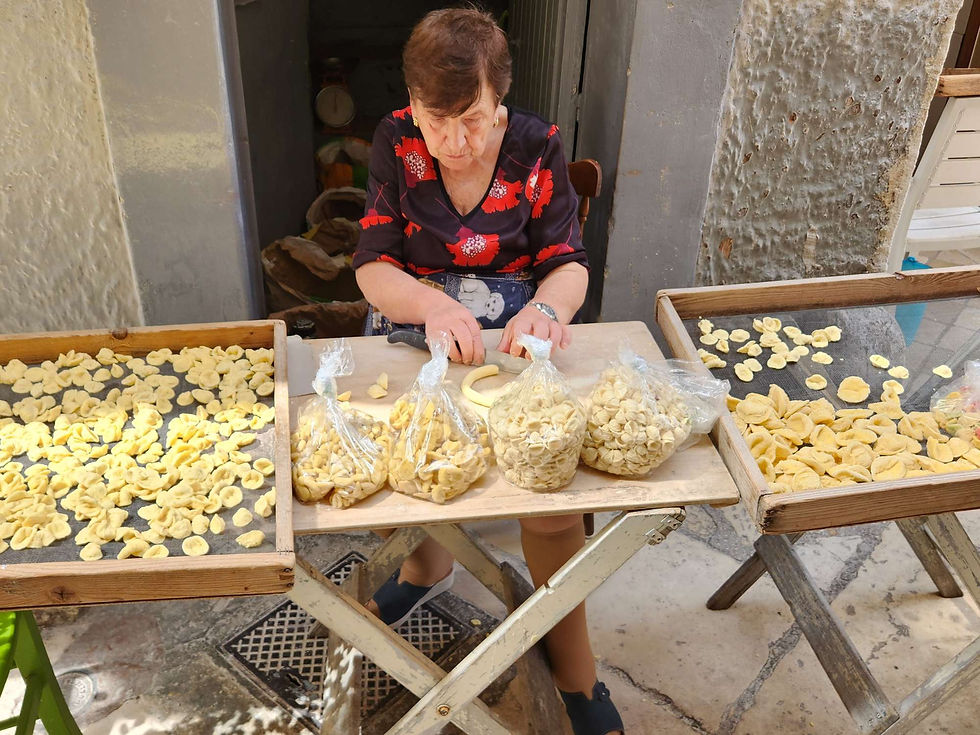
It was mesmerizing to watch them use nimble thumbs and a small knife to press and flick the semolina dough into shape at breathtaking speed. Of course, we couldn't resist purchasing a bag from nearly every vendor (I now have enough pasta to last us our entire holiday!).
With bags of local pasta tucked gently into our backpacks, we continued on our way to the impressive Castello Normanno-Svevo, a fortress that has stood guard over Bari for nearly nine centuries.

Originally commissioned around 1132 by the Norman king Roger II to secure the harbor, the castle's history took a dramatic turn in 1156 when William I of Sicily—nicknamed "the Wicked"—destroyed it along with the rest of the city. Fortunately, the structure was rebuilt in 1233 by Emperor Frederick II, giving us the imposing, resilient fortress we were able to explore today.
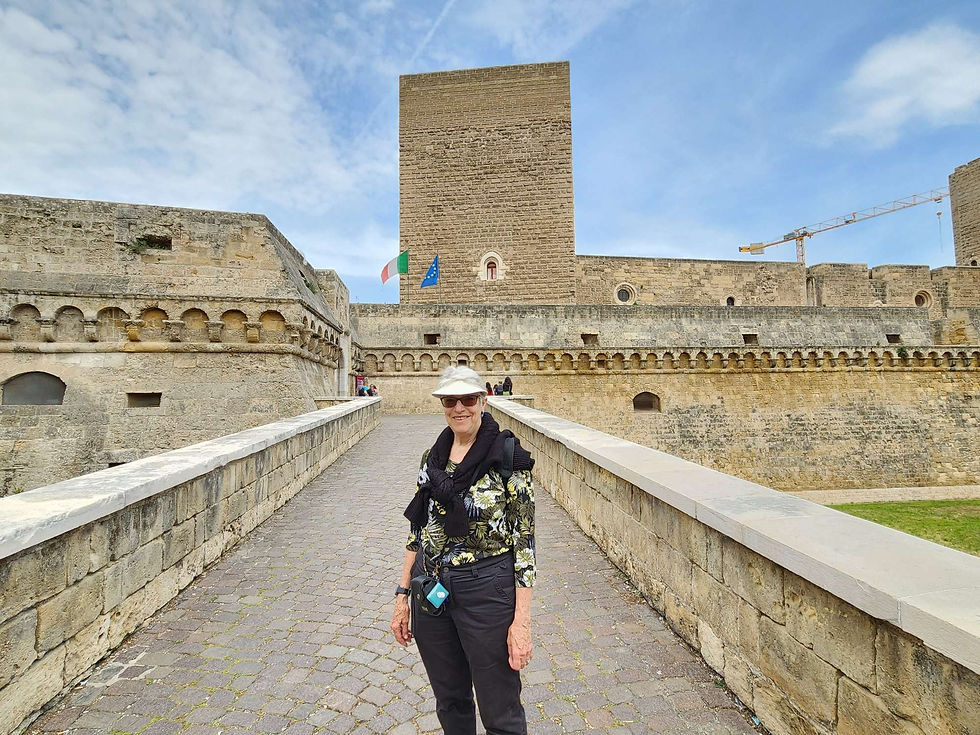
We decided to pay the 10-euro entry fee to tour the castle , but unfortunately, we found ourselves rather unimpressed by the interior. While the fortress is massive from the outside, the inner rooms are quite plain and offer limited authentic furnishings, focusing instead on several audio-visual shows highlighting the castle's extensive history. The upper level is dedicated to a collection of salvaged portions of pottery and ancient buildings.

The inner courtyard has two small rooms displaying a dozen 19th-century hand-painted bottles depicting Saint Nicholas, which were confiscated from 'Organized Crime'.

Although it provides a shaded escape, (or a haven on a rare stormy day), we felt the experience didn't quite live up to the ticket price.

After working up an appetite exploring the charming streets and castle of Bari, we refueled at LA Salumeria, which specializes in a dozen types of amazing sandwiches; I happily devoured my half with gusto.

Next, we paid a 9-euro fee to view the nearby Cathedrale di Bari, a fascinating mix of 11th-century history and 18th-century reconstruction, which features a deceptively plain interior designed to highlight an exquisite rose window.


The fee includes a visit to the lower chapel and a truly macabre crypt. The lower chapel is gorgeous,


but there is a desiccated female mummy in a glass coffin, a "saint" with a wild backstory that apparently involved a bear protecting her, a failed burning-at-the-stake due to rain, and a blind man who received his sight by her touch.

I found it fascinating... Tina not so much.
Exiting the Cathedrale de Bari, we continued our walk beside the Adriatic sea along the curving Bari Promenade, once a fortress wall, now opened in the 30's under fascist rule into what the locals nickname their "front porch".

It leads us to The Theatre Margharita, a 20th century museum of contemporary art replacing the former wooden theatre the Varietà Margherita, which local entrepreneurs saw as a potential rival to their own Petruzzelli Theater.

Inside we saw one of the best student art shows that I have seen in a long time. As an art teacher, I wish I had this idea: working with the communities local recycling program these college art students created amazing collage images using recycled garbage to create images of famous people or scenes from movies.


Sguardi Sul Cinema was a 'must see' exhibition.
We finally finished our day with a walk by the shaming pole, the Colonna Infame. Dating back to the 16th century, this unsettling monument was historically used to publicly humiliate those who couldn't pay their debts.

Imagine an unfortunate individual with hands tied against this column, forced to stand through the day unable to stop any form of abuse hurled towards them.
On that cheery note, we hobbled back to our AirB&B (my bandaged big toe throbbing) and finished our day with a home-cooked meal of chicken with the freshly made orecchiette pasta we purchased earlier—delicious!


Comments